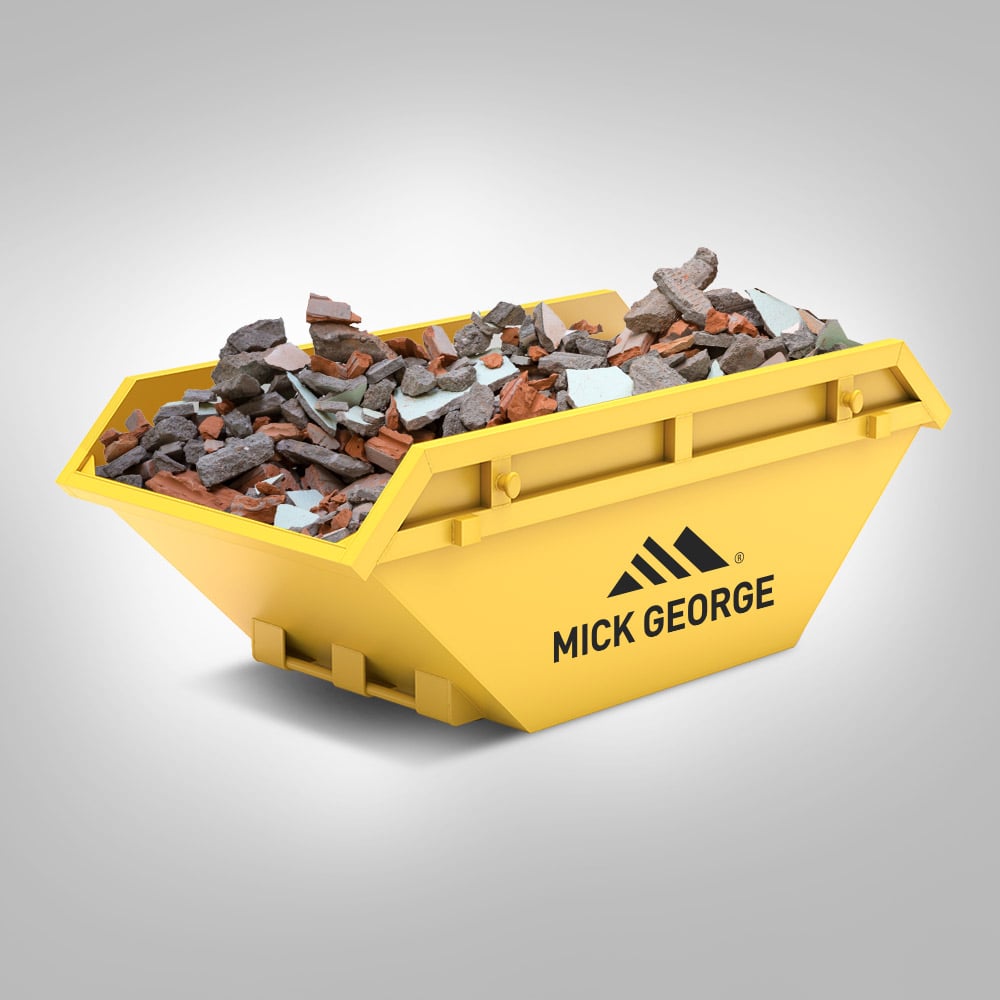
Inert Waste Skips
The Mick George Group are the leading skip hire company in the East Midlands and East Anglia. Inert Waste Skip are generally for outdoor materials such as, bricks, tiles, concrete, ceramics, soil, clays, sub-soil, top-soil, or hardcore mix (less than 10% tarmac). Inert, Hardcore or Soil Only Waste Skips are only available for 4 Yard and 6 Yard skips.Material
- Inert Waste (3)
Colour
- Yellow (3)
Size
Price
-
8 Yard Skip – Inert Waste
- Finance Options Available
- Quick Delivery & Great Rates
From £236.00 Was£250.00From £283.20 Was£300.00 -
6 Yard Skip – Inert Waste
- Finance Options Available
- Quick Delivery & Great Rates
From £215.00 Was£230.00From £258.00 Was£276.00 -
4 Yard Skip – Inert Waste
- Finance Options Available
- Quick Delivery & Great Rates
From £195.00 Was£210.00From £234.00 Was£252.00
Inert Waste Skips
If you’re undertaking a small domestic project such as a house refit, an extension, a clear-out or a garden project, our inert waste skip hire service could be the ideal waste solution. Inert waste generally includes outdoor materials such as bricks, concrete, ceramics, soils, clays and tiles. Our inert waste skips are available in both 4 yard and 6 yard sizes, making them most suited to smaller house and garden building projects that are generating inert waste.
Our inert waste skip hire service guarantees quick delivery at an affordable price. If you need to safely and efficiently remove inert waste from your project site, contact us today.
Frequently Asked Questions
What is an inert waste skip?
An inert waste skip is for heavy building and groundworks waste that won’t rot, burn or react, such as bricks, concrete, rubble and soil. Mick George inert skips come in 6 yard and 8 yard sizes. They suit landscaping, extensions and ground works, where rubble and soil come out together.
What counts as inert waste?
Inert waste is material that does not break down, burn or react chemically once disposed of, so it poses a little risk to soil or water. On a building or garden project, that means clean bricks, concrete, stone, tiles, ceramics, soil, clay and sand. Wood, plasterboard and green waste are not inert because they rot or release gases as they breakdown.
What can you put in an inert skip?
You can put bricks, blocks, concrete, paving slabs, stone, ceramic tiles, topsoil, subsoil and clay in a Mick George inert skip, mixed together. Hardcore containing some tarmac is accepted, as long as tarmac makes up less than 10% of the load. Fill the skip level with the top, because heavy waste piled higher cannot be lifted safely.
What’s the difference between an inert waste skip, a hardcore skip and a muck skip?
All three take heavy waste, but each suits a different load. A hardcore skip takes hard rubble only, such as bricks, concrete and slabs, and is the cheapest of the three. A muck skip is for soil and clay only. An inert skip takes both together, which makes it the right choice when a job produces rubble and soil at the same time, such as digging footings or levelling a garden.
Why is an inert waste skip cheaper to hire than a general waste skip?
Inert waste costs less to dispose of because it qualifies for the lower rate of landfill tax. From April 2026, that rate is £8.65 per tonne, against £130.75 per tonne at the standard rate that applies to general waste. Much inert waste is also recycled or reused.
What would make my inert waste load contaminated?
Anything that isn’t inert contaminates the load. Common examples are:
- Wood, plastic, metal, plasterboard and general rubbish
- Roots and green waste
- Hardcore with more than 10% tarmac
- Soil affected by oil, fuel or chemicals
- Soil containing Japanese knotweed
A contaminated skip has to be processed as mixed waste, which usually means an extra charge. Asbestos must never go in a standard skip, it needs a dedicated asbestos skip.
Is soil classed as inert waste?
Yes. clean natural soil, including topsoil, subsoil and clay, is classed as inert. It stops being inert if it contains oil, fuel, chemicals or building waste such as plasterboard, and soil from land with a history of industrial use may not qualify. If you’re unsure, Mick George offers rapid hazardous testing to check the soil before disposal.
What happens to inert waste after it’s collected? Is it recycled?
Yes, wherever possible. Inert waste is taken to a Mick George facility and separated. It stops being inert if it contains oil, fuel, chemicals or building waste such as plasterboard, and soil from land with a history of industrial use may not qualify. If you’re unsure, Mick George offers rapid hazardous testing to check the soil before disposal.
Get the latest news & offers