Wood Stain
We stock a fantastic range of water resistant wood stain for decking, fencing and garden buildings. For fencing one coat will colour and weather-proof with a second deepening the colour and extending the lifespan.-
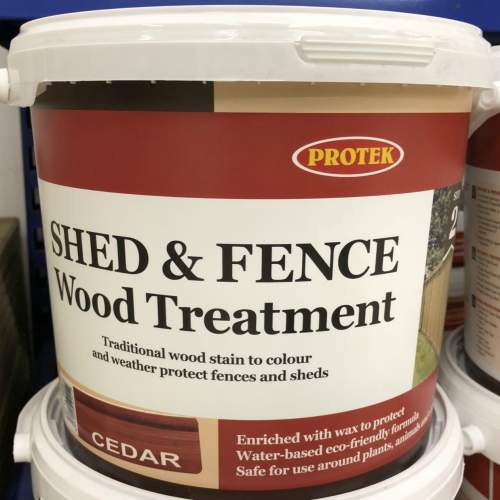
Shed & Fence Cedar Woodstain
- 0% interest Available*
- Great Quality & Quick Delivery
£8.58 Was£9.14£10.30 Was£10.97 -
Shed & Fence Golden Brown Woodstain
- 0% interest Available*
- Great Quality & Quick Delivery
£9.33 Was£9.71£11.20 Was£11.65 -
Moss Green Shed & Fence Woodstain
- 0% Interest Available*
- Great Quality & Quick Delivery
£9.33 Was£9.71£11.20 Was£11.65 -
Nut Brown Shed & Fence Woodstain
- 0% Interest Available*
- Great Quality & Quick Delivery
£9.33 Was£9.71£11.20 Was£11.65 -
Pale Green Shed & Fence Woodstain
- 0% Interest Available*
- Great Quality & Quick Delivery
£9.33 Was£9.71£11.20 Was£11.65 -
Pale Sage Wood Stain & Protector
- 0% Interest Available*
- Great Quality & Quick Delivery
£29.56 Was£30.74£35.47 Was£36.89 -
Gun Metal Grey Wood Stain & Protector
- 0% Interest Available*
- Great Quality & Quick Delivery
£30.48 Was£31.80£36.58 Was£38.16
Frequently Asked Questions
Why use Wood Stain Colours?
Compared to paint, stain can be more economical, easier to use and longer-lasting while also letting the natural look of wood shine through.
How long do Wood Stain Colours last?
When applied to wood, wood stain can last up to 3-5 years on wood due to the effects of sunlight.
Wood stains can be kept for 1 year if the cans have been opened, but unopened cans will last 2 – 3 years.
What stain is best for a fence?
A water-based, high-build fence stain is the best choice for panels and closeboard because it dries quickly, can be sprayed, and once dry is harmless to plants, pets and animal housing. Our Shed & Fence Woodstain is that type: a micro-porous coating with a built-in mould inhibitor that repels water while letting the timber breathe. The oil-based decking stain on our decking page works on fences too but costs roughly three times as much per litre, so keep it for boards you walk on.Â
Is staining a fence worth it?
Yes, mainly for looks and to slow weathering, but not because the fence would rot without it. Pressure-treated panels are already protected against insect attack and fungal decay, so a stain’s job is to stop the timber greying in sunlight, shed rain before it soaks in, and keep algae and mould off with its inhibitor. At around £11 for a 5 litre tin that covers 60m², a coat works out at little more than £1 per panel, which is cheap insurance against a run of panels that costs £29 to £46 each to replace. Recoat every 2 to 5 years and the fence stays looking new rather than silver.Â
What time of year should you stain a fence?
Late spring through to early autumn is the time to stain a fence, with a dry spell of at least two days ahead of you. The stain needs the timber dry, air temperatures above 5°C and no rain for 48 hours after application, so a settled week in May, June or September usually gives the best conditions. Avoid the hottest part of a July afternoon on a south-facing fence, where the coating dries before it can soak in, and avoid autumn once the mornings turn damp, because panels rarely dry through again until spring. If you have missed the window, waiting a few months does no harm to a treated fence.Â
What are the most common fence staining mistakes?
The most common mistake is staining damp timber, whether from rain, dew or a fence that was pressure-washed the day before; the stain cannot bond and peels within a season. Other common mistakes include applying it over green algae or a flaking old coating without cleaning off first, staining fresh pressure-treated panels before the preservative has settled.
How long should I wait before staining new pressure-treated fence panels?
Allow new pressure-treated panels to weather for around three months before staining. Fresh treatment leaves the timber damp, so a stain applied straight away can struggle to bond and may react with the treatment. A simple check is to splash water on a board: if it beads, wait longer; if it soaks in within a minute or so, the timber is ready. Brown-treated panels and the green tint on standard treated timber will still influence the final colour, so test a hidden section first, particularly with lighter shades such as Pale Sage or Pale Green.Â
Should I apply fence stain with a brush or a sprayer?
Use a pump-up garden sprayer for a long run of rough-sawn fencing and a brush for anything fiddly or close to things you do not want coloured. Our Shed & Fence stain is mixed to a consistency that works through a sprayer, brush or roller. Spray on a still day with plants, paving and the neighbour’s side sheeted off, then go over the surface with a brush to work the stain into the grain and even out runs. Brushing suits trellis, decorative panels and posts, and gives the most control over how dark the finish comes out.Â
How many fence panels will one tin of Shed & Fence stain cover?
One 5 litre tin of Shed & Fence Woodstain covers around 60m² with a single coat, which is roughly 15 to 18 standard 6ft x 6ft fence panels on one side, based on the average coverage of 12m² per litre. Rough-sawn feather edge and waney lap soak up more than smooth tongue and groove, so budget towards the lower end, and halve the figure if you are staining both sides or putting on a second coat to deepen the colour.Â
Is there a natural or clear fence stain that keeps the timber’s own colour?
No, every fence stain in the range is coloured; there is no clear version. The reason is practical: it is the pigment in a stain that blocks UV light, so a clear coating would repel water but still let the fence turn grey. For the closest thing to a natural timber look, Golden Brown gives a warm honey tone similar to fresh sawn softwood, and Cedar adds a subtle red that suits weathered boards. If you want to keep the bare, untreated look, it’s best to leave the fence alone and accept it will silver, since the pressure treatment still protects the timber underneath.Â
Get the latest news & offers