Framing
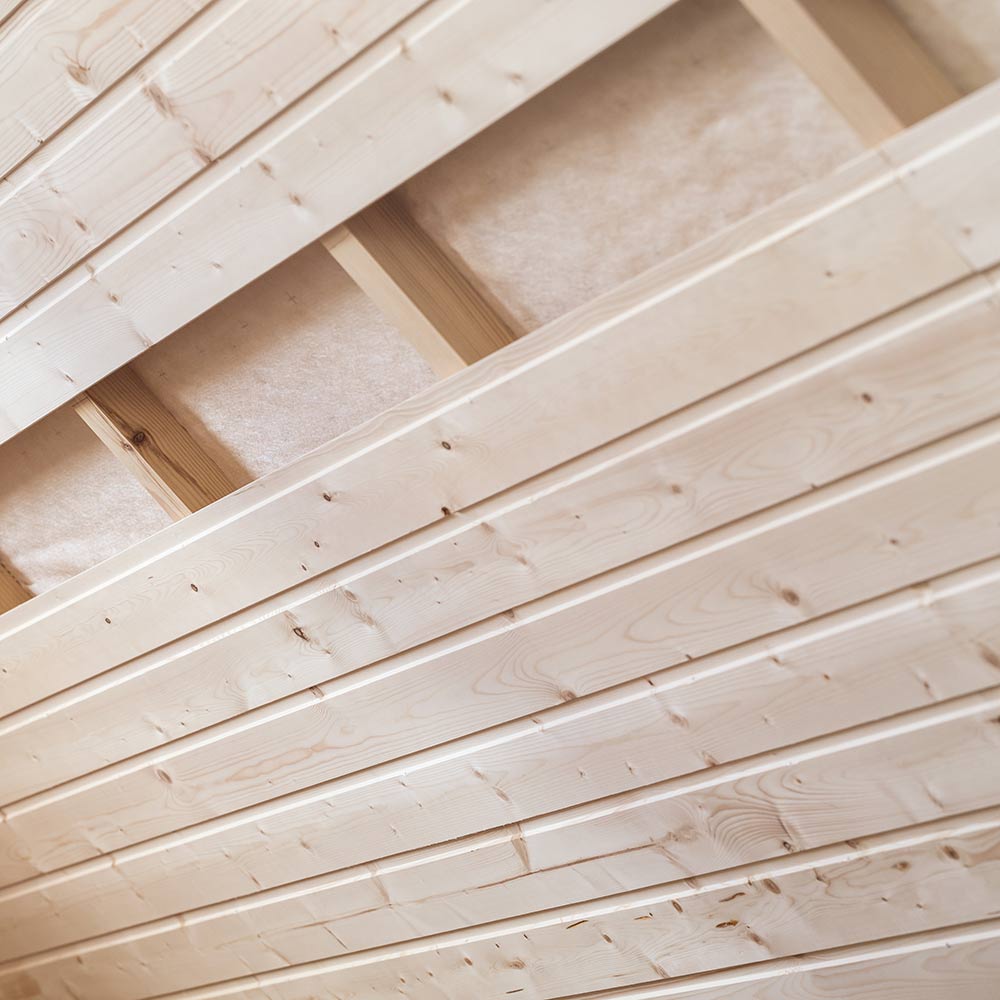
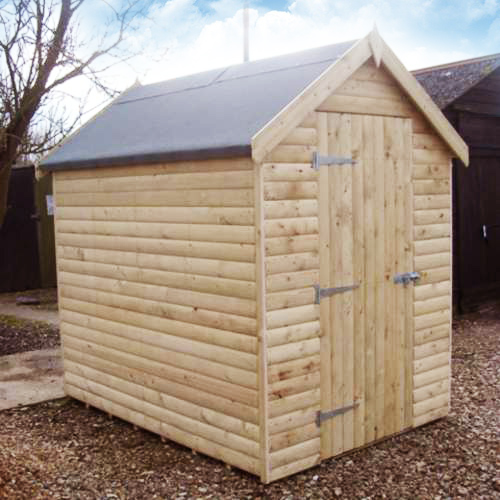
All our timber framing is pressure treated to ensure the maximum lifespan possible. We carry large stocks of timber framing – with rounded corners, along with loglap, tongue & groove cladding and shiplap for you to make or maintain your own timber buildings.Material
Size
- 2.4m x 47mm x 100mm (1)
- 3.0m x 47mm x 100mm (1)
- 3.0m x 47mm x 125mm (1)
- 3.0m x 47mm x 150mm (1)
- 3.0m x 47mm x 175mm (1)
- 3.0m x 47mm x 200mm (1)
- 3.0m x 47mm x 225mm (1)
- 3.6m x 47mm x 100mm (1)
- 3.6m x 47mm x 125mm (1)
- 3.6m x 47mm x 150mm (1)
- 3.6m x 47mm x 175mm (1)
- 3.6m x 47mm x 200mm (1)
- 3.6m x 47mm x 225mm (1)
- 3.9m x 47mm x 100mm (1)
- 4.2m x 47mm x 100mm (1)
- 4.2m x 47mm x 125mm (1)
- 4.2m x 47mm x 150mm (1)
- 4.2m x 47mm x 175mm (1)
- 4.2m x 47mm x 200mm (1)
- 4.2m x 47mm x 225mm (1)
- 4.8m x 47mm x 100mm (1)
- 4.8m x 47mm x 125mm (1)
- 4.8m x 47mm x 150mm (1)
- 4.8m x 47mm x 175mm (1)
- 4.8m x 47mm x 200mm (1)
- 4.8m x 47mm x 225mm (1)
- 5.4m x 47mm x 100mm (1)
- 6.0m x 47mm x 100mm (1)
- 6.0m x 47mm x 150mm (1)
- 6.0m x 47mm x 175mm (1)
- 6.0m x 47mm x 200mm (1)
- 6.0m x 47mm x 225mm (1)
- 2400mm (3)
- 3600mm (3)
- 3900mm (2)
- 4200mm (3)
- 4800mm (3)
- 5100mm (1)
- 5400mm (3)
Length
Width
Thickness
Weight
- 20kg (1)
Application
- Loglap (1)
- Mortar (1)
- Shiplap (1)
- Tongue & Goove Cladding (1)
Price
-
47mm x 100mm Treated C24 Carcassing Timber
- Responsibly Sourced
- Excellent Strength Properties
From £6.23 Was£6.48From £7.48 Was£7.78 -
47mm x 125mm Treated C24 Carcassing Timber
- Responsibly Sourced
- Excellent Strength Properties
From £9.81 Was£10.20From £11.77 Was£12.24 -
47mm x 150mm Treated C24 Carcassing Timber
- Responsibly Sourced
- Excellent Strength Properties
From £11.75 Was£12.22From £14.10 Was£14.66 -
47mm x 175mm Treated C24 Carcassing Timber
- Responsibly Sourced
- Excellent Strength Properties
From £13.72 Was£14.27From £16.46 Was£17.12 -
47mm x 200mm Treated C24 Carcassing Timber
- Responsibly Sourced
- Excellent Strength Properties
From £15.66 Was£16.28From £18.79 Was£19.54 -
47mm x 225mm Treated C24 Carcassing Timber
- Responsibly Sourced
- Excellent Strength Properties
From £17.63 Was£18.34From £21.16 Was£22.01 -
Postcrete
- 0% Interest Available*
- Great Quality & Quick Delivery
£5.82 Was£6.05£6.98 Was£7.26 -
Tongue and Groove Cladding
- 0% Interest Available*
- Great Quality & Quick Delivery
From £11.27 Was£11.72From £13.52 Was£14.06 -
Shiplap
- 0% Interest Available*
- Great Quality & Quick Delivery
From £4.97 Was£5.18From £5.96 Was£6.22 -
Loglap
- 0% Interest Available*
- Great Quality & Quick Delivery
From £8.96 Was£9.32From £10.75 Was£11.18
Framing
We understand how important a good, solid frame is to begin any timber landscaping project. At Mick George we have a selection of deck framing posts and decking joists to give your decking the lift and sturdiness it deserves.
Frequently Asked Questions
What is C24 treated timber?
C24 is a strength grade for softwood, and “treated” means it has been pressure treated with preservative. The C stands for coniferous (softwood) and the 24 is its bending strength in newtons per square millimetre, so a C24 joist can carry more weight over a longer span than a lower grade of the same size. Our treated C24 carcassing is kiln dried and regularised, meaning it is planed to a consistent size with rounded corners, and comes in 47 x 100mm up to 47 x 225mm in lengths from 2.4m to 6m.
Is C16 or C24 timber better for fence framing?
C24 is the better grade, but a basic fence does not need it. C24 is stronger and straighter than C16, with fewer and smaller knots, which is why it is the grade for joists, beams and anything carrying a load. For fence rails and gate frames C16 is strong enough but the straightness of C24 is still better for a fence and the price difference is small. We stock C24 rather than C16 for exactly that reason. For ordinary closeboard fencing you do not need carcassing at all; our sawn fence rails in 38 x 87mm and 47 x 100mm are made for the job and cost less per metre.
Can C24 treated timber be used outside and get wet?
Yes. Treated C24 is pressure treated against rot, fungal decay and insect attack, so it is made to be used outdoors and to get wet. The one limit is ground contact: standard treated carcassing is treated for use above ground, so it suits fence rails, gate frames, pergola beams, shed frames and deck joists that are kept off the soil, but it should not be set into the ground as a post. Use a fence post for that, which is treated to a higher level. Brush a preservative onto any cut ends, because the treatment does not go all the way through the timber, and let it dry out before you paint or stain it.
How long does C24 treated timber last?
Treated C24 carcassing used outside and kept off the ground should last 20 to 30 years, and indoors it will outlast the building. How long it actually lasts depends on how wet it stays. Timber that can dry out between showers, such as a fence rail or a pergola beam, lasts the longest. Timber that sits against soil, under a leaking roof or in a pocket where water collects can fail in under 10 years, treated or not. Keep the ends off the ground, leave a gap behind cladding so air can move, re-treat any cuts, and the preservative will do its job for decades.
Which size of treated carcassing do I need for a shed base or garden building frame?
Use 47 x 100mm for most of the frame and move up to 47 x 150mm where the timber has to span more than about 2.4m. For a shed base, 47 x 100mm bearers at 400mm to 600mm centres carry a floor up to around 3m wide; a larger base, or one sitting on only a few piers, wants 47 x 150mm joists. Wall frames are built from 47 x 100mm studs at 600mm centres with a top and bottom plate of the same size. Roof rafters follow the span: 47 x 100mm up to about 2.4m, 47 x 125mm or 47 x 150mm beyond that. The 47 x 175mm to 47 x 225mm sizes are for garden rooms and decks with long, unsupported spans. All sizes come in lengths up to 4.8m, and 47 x 100mm and 47 x 150mm go up to 6m.
What is the difference between shiplap, tongue and groove and loglap cladding?
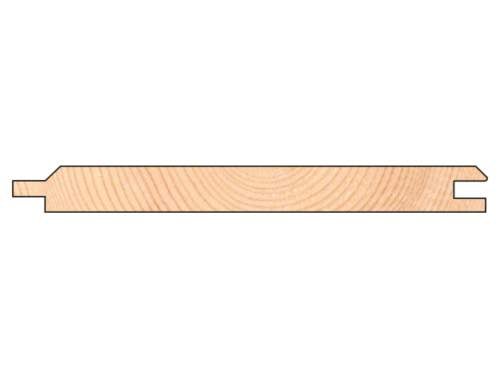
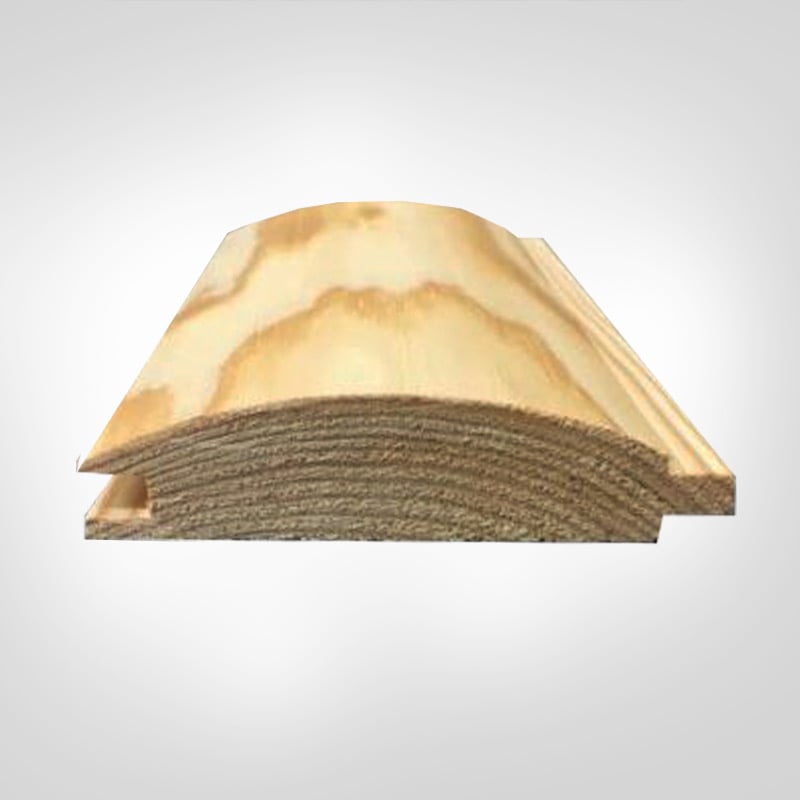
The difference is the profile of the board, which changes how the wall looks and how it sheds rain. Tongue and groove boards slot together to give a flat, flush wall with a fine joint line. Shiplap has a curved top edge that overlaps the board below, so each board casts a small shadow and water runs straight off the face. Loglap has a rounded face that gives a wall the look of stacked logs. Our tongue and groove and shiplap are both 12 x 122mm planed boards covering 110mm each; loglap is thicker at 18 x 93mm but covers only 85mm per board, so a wall needs about a quarter more boards. All three are pressure treated.
What are the downsides of shiplap cladding?
Shiplap’s main downsides are that the boards are thin, so they dent and cup more easily than thicker cladding, and that they move with the weather. At 12mm finished thickness, a shiplap board will mark if something is leant against it, and if it is fixed while still wet from treatment it will shrink in the first dry spell. The overlap only sheds water if the boards go on the right way up, with the curved edge at the top; fitted upside down they trap it. Shiplap also has to run horizontally, needs staining or painting every few years to keep its colour, and takes longer to fit than sheet cladding because every board is fixed separately.
Do you nail or screw shiplap cladding?
Either works, but nails are the usual choice because they are quicker and let the boards move. Use 40mm or 50mm galvanised or stainless nails, one per board at each batten, driven through the face of the board about 15mm to 20mm up from the bottom edge so the next board covers the overlap. Never fix through the overlap itself or the boards cannot expand and will split. Screws give a firmer hold and let you take a board off later, which is useful around windows and doors; use a coated exterior screw such as our 60mm deck screws and pre-drill near the ends.
Get the latest news & offers