Wood Stain
We stock a fantastic range of water resistant wood stain for decking, fencing and garden buildings. For fencing one coat will colour and weather-proof with a second deepening the colour and extending the lifespan.-
Antique Pine Decking Stain
- 0% Interest Available*
- Great Quality & Quick Delivery
£26.88 Was£27.96£32.26 Was£33.55 -
Dark Green Decking Stain
- 0% Interest Available*
- Great Quality & Quick Delivery
£26.87 Was£27.95£32.24 Was£33.54 -
Golden Cedar Decking Stain
- 0% Interest Available*
- Great Quality & Quick Delivery
£26.87 Was£27.95£32.24 Was£33.54 -
Light Green Decking Stain
- 0% Interest Available*
- Great Quality & Quick Delivery
£26.87 Was£27.95£32.24 Was£33.54 -
Nut Brown Decking Stain
- 0% Interest Available*
- Great Quality & Quick Delivery
£26.87 Was£27.95£32.24 Was£33.54 -
Rustic Oak Decking Stain
- 0% Interest Available*
- Great Quality & Quick Delivery
£26.88 Was£27.96£32.26 Was£33.55 -
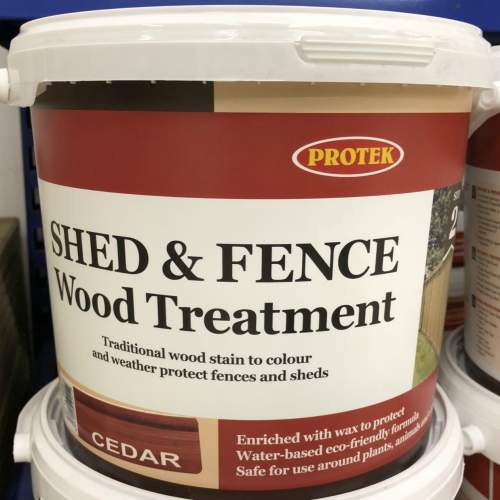
Shed & Fence Cedar Woodstain
- 0% interest Available*
- Great Quality & Quick Delivery
£8.58 Was£9.14£10.30 Was£10.97 -
Shed & Fence Golden Brown Woodstain
- 0% interest Available*
- Great Quality & Quick Delivery
£9.33 Was£9.71£11.20 Was£11.65 -
Moss Green Shed & Fence Woodstain
- 0% Interest Available*
- Great Quality & Quick Delivery
£9.33 Was£9.71£11.20 Was£11.65 -
Nut Brown Shed & Fence Woodstain
- 0% Interest Available*
- Great Quality & Quick Delivery
£9.33 Was£9.71£11.20 Was£11.65 -
Pale Green Shed & Fence Woodstain
- 0% Interest Available*
- Great Quality & Quick Delivery
£9.33 Was£9.71£11.20 Was£11.65 -
Pale Sage Wood Stain & Protector
- 0% Interest Available*
- Great Quality & Quick Delivery
£29.56 Was£30.74£35.47 Was£36.89
Frequently Asked Questions
What is Wood Stain?
Wood stain is a semi-transparent coating that penetrates the wood to provide colour whilst also allowing features of the wood, such as colour and grain effects, to remain visible.
Where is Wood Stain Used?
Wood stain is used to enrich the look of wood, bringing out the natural grain and adding depth and colour. It can also offer certain protections as a result of the colouring and absorption of the stain deep into the wood.
What is the best stain to use on decking?
For a walked-on surface the best choice is a penetrating, oil-based decking stain rather than a fence or shed coating. Our Decking stain range here is linseed oil based, so it soaks into the boards instead of sitting on top where foot traffic would wear it through, and it is safe around children and pets once dry. It comes in six colours: Antique Pine, Rustic Oak, Golden Cedar, Nut Brown, Light Green and Dark Green.Â
Is it better to oil or stain decking?
Stain is the better choice for most softwood decks because it adds colour and UV protection as well as water repellency, and goes two or three years between coats. Oil gives the most natural look but needs topping up most years and will not hide greying or weathered boards. The two overlap more than people expect: many decking stains are linseed oil based, so it penetrates the timber the way an oil does while carrying pigment like a stain.Â
What month should you stain your deck?
Late spring to early autumn, roughly May to September, is the window for staining a deck in the UK. The stain needs the timber dry to the core, air temperatures above 5°C and no rain for 48 hours after application, so a settled spell is more important than the exact month. Avoid early mornings when dew is on the boards and the hottest part of a summer day, when the stain can dry before it penetrates. New pressure-treated decking must weather for at least three months before any stain goes on, so a deck laid in spring is usually ready for colour by late summer.Â
Can I put new stain over old stain on a deck?
Yes, provided the old stain is sound and the new one is the same type. A penetrating oil-based stain can go over a previous oil-based coat once the deck has been cleaned, as long as nothing is flaking. Old paint, varnish and any peeling film coating must be fully removed first, because a new stain cannot bond through them. Bear in mind that the old colour shows through: going darker works well, but a lighter colour over a dark one will not come out as the tin suggests.
Which of these stains is suitable for railway sleepers?
The oil-based Decking Stain is the one to use on railway sleepers, because it is made for exterior softwood and hardwood and will cope with sleepers used as steps or seating edges that get walked and sat on. For sleepers used purely as raised bed or border edging, a 5 litre tin of Shed & Fence Woodstain is the cheaper route and covers around 60m² per coat.Â
Which stain gives an antique or rustic oak finish?
Rustic Oak Decking Stain is the closest match if you want an antique oak or weathered oak look on decking, giving a mid-brown with the grain still visible. Antique Pine is the lighter, honey-toned alternative for a softer aged finish, and Nut Brown is the darker end if you want something nearer to old, oiled oak. The final shade depends heavily on the timber underneath: fresh pressure-treated boards carry a green tint that cools the colour, while grey, weathered boards take it darker.Â
How many square metres does a tin of decking stain cover?
A 2.5 litre tin of decking stain covers around 37m² with one coat, which works out at roughly 18m² of deck with the recommended two coats. A typical 4m x 3m deck therefore takes one tin, with a little spare for the edges and step risers. Grooved and rough-sawn boards absorb more than smooth ones, so allow 10 to 20 per cent extra on a reeded deck or an old, dry one. The 5 litre Shed & Fence tins cover about 12m² per litre, around 60m² per coat, but are made for fences and sheds rather than deck boards.Â
Do I need to clean or sand a deck before staining it?
Yes you need to clean the deck but sanding isn’t necessary. Scrub the boards with warm water, detergent and a stiff brush, treat any green or black patches with a mould and algae cleaner, rinse well and let the timber dry out completely, which can take two or three dry days. Sanding is only needed to take off a flaking old finish or smooth splintered boards, and on new decking it is better to let the boards weather for three months.
Get the latest news & offers