Commercial General Waste Bins
General waste contains some of the most common materials generated by businesses. Choosing a general waste collection service provides a simple, sustainable, and cost-effective way to dispose of your waste responsibly, helping your business reduce landfill use and improve environmental performance.Home / Commercial Waste Bins / Mixed General Waste Bins
Material
Capacity
- 1100 Litres (1)
- 240 Litres (1)
- 360 Litres (1)
- 660 Litres (1)
- FEL (1)
Price
Frequently Asked Questions
What is general waste?
General waste is everyday rubbish that cannot be recycled through standard recycling streams such as paper, cardboard, glass, or plastics. It typically includes food-contaminated packaging, polystyrene, tissues, and other non-recyclable materials produced during regular business operations.
What happens to my general waste after collection?
At the Mick George Group, we aim to divert as much general waste as possible from landfill. Collected waste is sent to energy-from-waste (EfW) or waste recovery facilities, where it is processed to generate renewable electricity and heat, reducing environmental impact and supporting the circular economy.
What bin sizes are available for general waste?
We supply a full range of containers to suit every business size and sector:
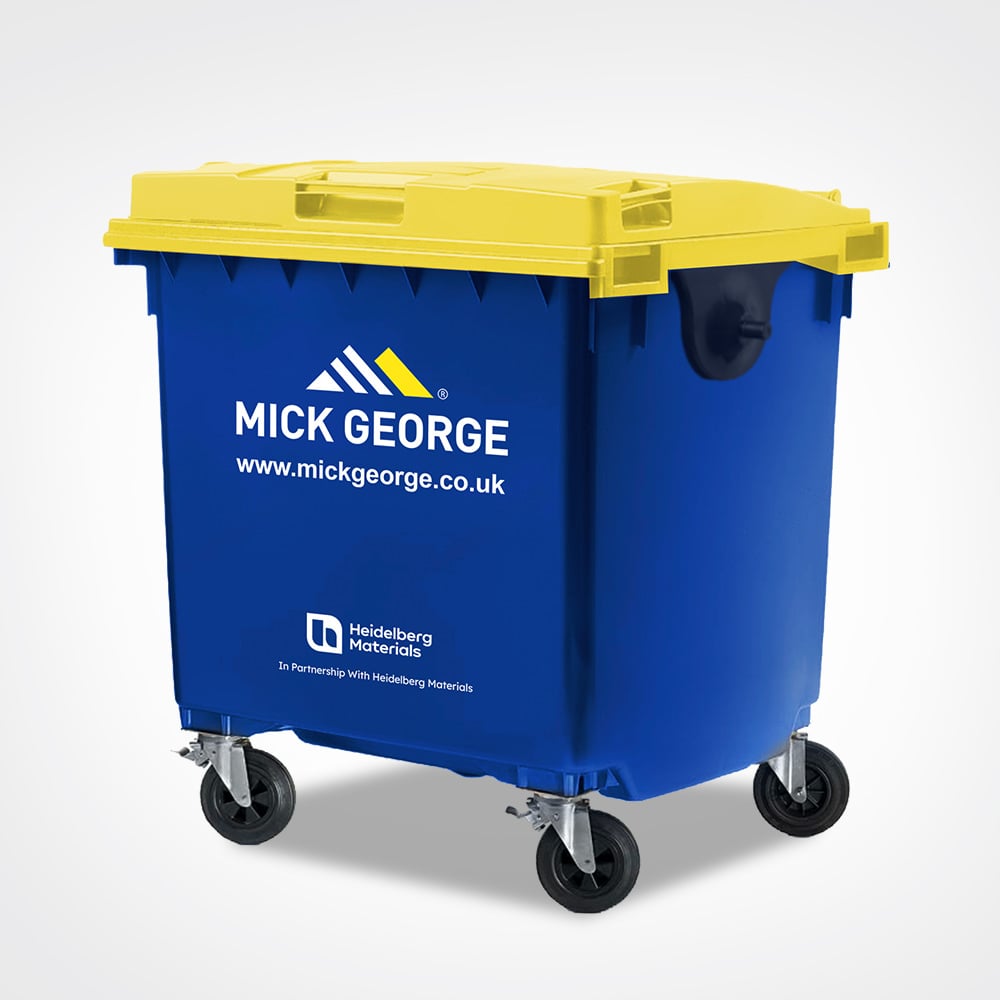
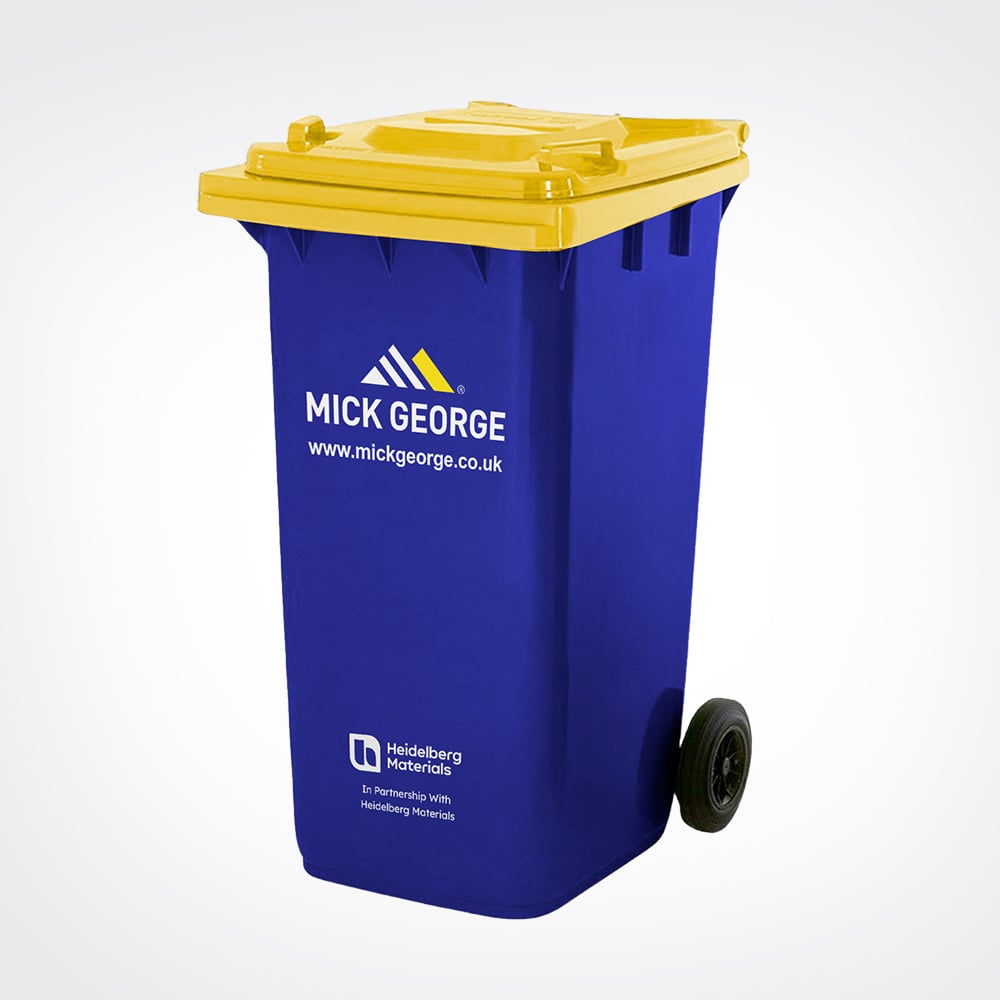
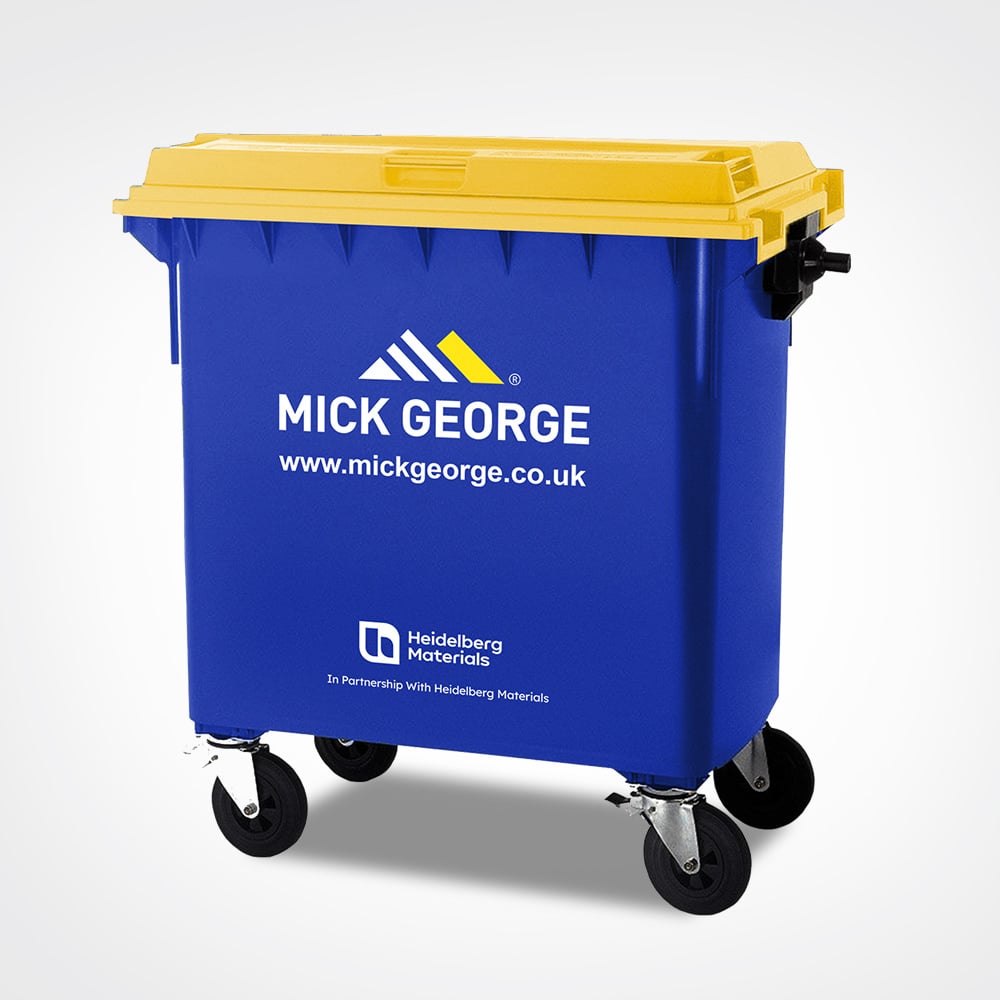
- 240L wheelie bins – small offices or low waste producers
- 660L & 1100L bins – medium to large commercial sites
- Front-End Loaders (FELs) – for high-volume waste needs
How often will my general waste be collected?
Collection frequency is completely flexible. We’ll design a schedule around your waste volume and business activity, ensuring your bins never overflow and your site remains compliant and tidy.
Do I need a waste transfer note for general waste?
Yes. Every business in the UK has a legal duty of care to ensure their waste is managed correctly. Mick George provides all the required waste transfer documentation to prove your waste is handled safely, responsibly, and in accordance with environmental law.
What can I not put in a general waste bin?
Recyclables, hazardous waste, electricals, clinical or sanitary waste, construction or bulky waste and liquids must all stay out of a general waste bin. Paper, cardboard, glass, metal and plastic bottles belong in the recycling bins, and food waste in its own bin where the workplace recycling rules apply.
Paint, chemicals and batteries are hazardous and need a specialist collection, as do TVs, printers, fridges and other electrical items. Rubble, plasterboard and furniture need a skip or single item collection. Anything that could injure the crew or damage the vehicle, such as gas bottles or needles, is refused outright.
What is surprisingly not recyclable and has to go in general waste?
Disposable coffee cups and lids, plastic film and carrier bags, used paper towels and tissues, and broken crockery are the most common items that look recyclable but belong in general waste. Coffee cups have a plastic lining bonded to the card, film and bags jam sorting machinery, tissues and towels have fibres too short to pulp, and ceramics ruin a batch of recycled glass. Other regular offenders are crisp packets, polystyrene, cling film, greasy takeaway boxes, till receipts (thermal paper) and wet wipes. Kept out of the recycling bin, they avoid the contamination charges that cost far more than a general waste collection.
Why does general waste cost more to collect than recycling?
Because it costs money to dispose of, while recycling is sold on. General waste goes to an energy-from-waste plant or landfill, both of which charge a gate fee per tonne, and landfilled waste also carries landfill tax. Recyclables such as cardboard and metal are sold to reprocessors, so the collection price only covers the lift. The difference shows in the per-collection rates: a 1,100 litre general waste bin costs £15.00 ex VAT per collection against £10.00 for the same size mixed recycling bin and £9.00 for cardboard. General waste is also heavier, so disposal costs rise with every bag.
Can my business be fined for putting recyclables or food waste in the general waste bin?
Yes. Under the workplace recycling rules in England, businesses above the employee threshold must keep food waste and dry recyclables out of their general waste, and the Environment Agency can issue compliance notices and fines to businesses that do not. Separately, every business has a legal duty of care for its waste, and breaching it is a criminal offence with unlimited fines in serious cases. In practice the first cost is usually from your collector: a general waste bin full of cardboard or food is heavier and more expensive to dispose of, and persistent misuse can lead to surcharges. Our Simpler Recycling page explains who the rules cover.
How can my business reduce the amount of general waste it produces?
Separate the three streams that make up most of it: cardboard and paper, dry mixed recycling and food. On a typical site those account for the bulk of what ends up in a general waste bin, and each has its own cheaper collection. After that, tackle what is left: switch from disposable cups and single-use packaging to reusable or recyclable alternatives, ask suppliers to take back pallets and transit packaging, and return printer cartridges and electricals through take-back schemes. Our waste reports show the tonnage in each bin, so you can see where general waste is still coming from and downsize the bin or reduce collections as volumes fall.
Do I still need a general waste bin if my business recycles almost everything?
Yes, almost always, but it can be small and collected less often. Every workplace produces some residual waste, such as coffee cups, tissues, plastic film, broken crockery and non-recyclable packaging, and under the workplace recycling rules that residual stream must be collected separately from recycling and food rather than squeezed into a recycling bin. A business that recycles well can usually manage with a 240 litre general waste bin on fortnightly collection, which costs £8.50 ex VAT per visit. If a general waste bin is going out half empty, ask to move it to a smaller size or a less frequent schedule.
What should I do with batteries, aerosols and paint if they can't go in general waste?
Arrange a hazardous waste collection for paint, chemicals and full or part-used aerosols, and recycle batteries through a battery collection point or WEEE scheme. Batteries can cause fires in bins and collection vehicles, so they must never go in general waste; most retailers that sell them provide free battery recycling boxes, and Mick George collects batteries with other electrical waste. Completely empty aerosol cans can go in dry mixed recycling as metal . Liquid paint is hazardous, but a tin of water-based emulsion left open to dry solid can go in general waste; solvent-based paints, varnishes and thinners always need the hazardous route.
Get the latest news & offers