Lime
Lime is a versatile material which offers breathable properties to help reduce moisture build up when used alongside cement. We offer a variety of Lime Small Bags including Hydrated Lime and Hydraulic Lime.Home / Aggregates / Small Bags / Lime
-
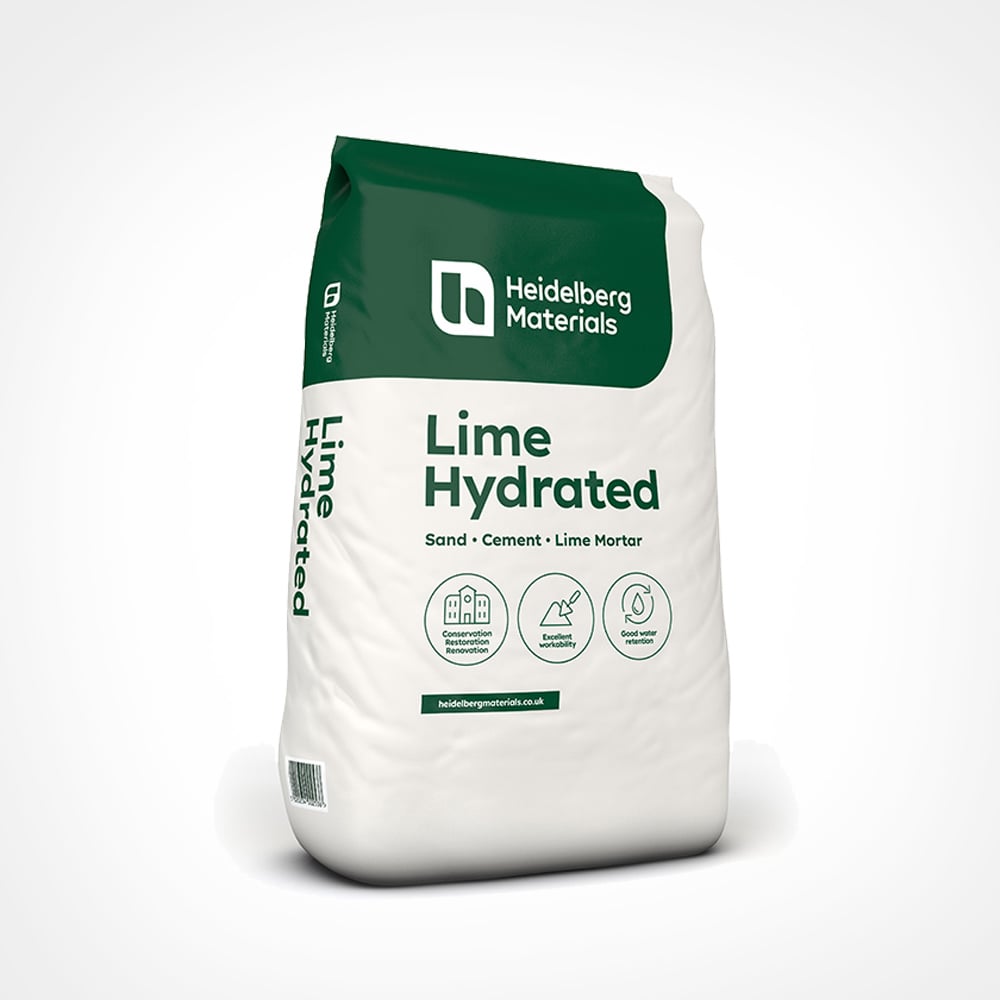
Heidelberg Materials Hydrated Lime 25kg Bag
- Excellent Workability
- Superb Water Retention
£14.81 Was£15.40£17.77 Was£18.48 -
Heidelberg Materials Natural Hydraulic Lime 25kg Bag
- Excellent Workability & Water Retention
- High Cohesion & Low Shrinkage
£24.22 Was£25.19£29.06 Was£30.23
What is Hydrated Lime Used For?
Hydrated lime is a versatile product that can be added to a concrete mix to make block and other concrete products. The end result of using Hydrated Lime is a denser, more water-resistant product.
What is the Difference Between Lime and Hydrated lime?
The main difference between lime products and Hydrated Lime products is that lime products contain calcium oxide whereas Hydrated Lime contains calcium hydroxide.
What is Natural Hydraulic Lime?
Natural Hydraulic Lime is produced by burning and slaking limestone which is quarried with a proportion of silica and trace elements.
Why add Lime to concrete?
Lime mortar has many benefits compared to straight concrete mortar. These qualities can help structures withstand weathering and aging allowing buildings to look better for much longer than they have done before.
Can I use Lime instead of cement?
There are two main types of lime can be used as a substitute for cement—Hydraulic Lime and Lime Putty. Lime Putty has a very slow setting time though and so most opt for Hydraulic Lime.
Which Lime do I need for bricklaying?
Natural Hydraulic Lime is a powdered lime used to make Hydraulic Lime Mortar. It is durable, easy to use, and a very popular choice amongst trade people.
Order your Lime today
If you would like to purchase small bags of Lime you can view our range here.
Frequently Asked Questions
What's the difference between hydrated lime and natural hydraulic lime?
Hydrated lime is calcium hydroxide, Ca(OH)â‚‚, produced by adding water to quicklime. When used in mortar, it gradually hardens through carbonation, whereas natural hydrated lime is made by burning naturally occurring limestone containing clay and other minerals. Those minerals give it hydraulic properties, meaning it can set in the presence of water.
What is NHL 3.5, and what is it used for?
Natural Hydrated Lime (NHL) 3.5 is a moderately hydraulic natural lime used to make mortar, render and plaster. NHL 3.5 is a popular product for brickwork, stonework and the repair of traditional buildings because it combines useful strength with breathability and flexibility.
Why use lime mortar instead of cement mortar in older buildings?
The main reason you would want to use lime mortar instead of cement mortar in an older building is compatibility. Typically, older buildings have been constructed with lime mortar because it works differently from modern cement mortar. Replacing the existing lime mortar with a hard cement mortar can cause problems for the original brickwork or stone.
What's the correct mix ratio for lime mortar?
There isn’t one universal lime mortar ratio. The correct mix will heavily depend on the type of lime, the sand, and what you’re using the mortar for. For lime mortar, well-graded sand is preferable to uniformly fine sand. You want a mixture containing different particle sizes so that the sand particles pack together effectively.
Why do bricklayers add hydrated lime to cement mortar?
Hydrated lime is often added to cement mortar to make the mortar more workable for the bricklayer. The mortar becomes easier to spread with improved adhesion, water retention and strength.
Can I make repointing mortar with hydrated lime instead of NHL?
Yes, you can make repointing mortar with hydrated lime instead of natural hydrated lime, but it behaves differently, and the choice depends heavily on the building.
How long does lime mortar take to set, and can I use it in cold weather?
Lime mortar can be used in cold weather, although it may cause complications. Do not use lime mortar in conditions below 5 degrees celsius as it is particularly vulnerable to frost which can disrupt the developing structure.Â
Get the latest news & offers