Commercial Glass Recycling Bins
Recycling glass is easy, affordable, and essential for businesses of any size and industry. It’s endlessly recyclable, so it should never end up in landfill. Arrange regular and reliable glass collection and recycling for any items your company produces from glass bottles and jars to windowpanes with Business Waste. Implementing glass recycling within your organisation helps contribute to a greener future and saves your business money.Home / Commercial Waste Bins / Glass Recycling Bins
Material
- Glass Waste (2)
Capacity
- 120 Litre (1)
- 240 Litres (1)
Price
Frequently Asked Questions
Who Needs Commercial Glass Recycling Collection?
Glass waste is produced across a wide range of industries, making commercial glass recycling collections essential for many businesses.
Businesses That Commonly Require Glass Waste Collection
- Pubs, bars, and clubs
- Restaurants, cafés, and takeaways
- Hotels and hospitality venues
- Laboratories and medical facilities
- Glaziers, glass manufacturers, and fitters
- Automotive and mechanical workshops
- Construction and demolition sites
- Schools, colleges, and universities
Whether you operate a small business or a large enterprise, our commercial glass recycling service helps you reduce waste, improve sustainability, and ensure full compliance with UK recycling regulations.
Which types of glass can't go in a glass recycling bin?
Light bulbs and Pyrex are the two to keep out, along with anything that is not bottle or jar glass. Bulbs and fluorescent tubes contain hazardous components and go through WEEE collection; heat-resistant glass such as Pyrex, oven dishes and lab glass melts at a different temperature and ruins a batch of recycled glass. Crockery, ceramics, mirrors, window panes and toughened or wired glass should also stay out of the bin. Bottles, jars, drinking glasses, vases and most ornaments are all fine.Â
Do bottles need rinsing, and do labels, lids and corks need removing first?
A quick empty and rinse is enough; labels can stay on. Glass is washed and crushed at the recycling plant, and paper labels burn off in the furnace, so there is no need to soak or peel them. Metal caps and screw tops should be removed and put in dry mixed recycling, and corks go in general waste. The main thing to avoid is liquid left in bottles: a bar’s worth of dregs adds weight, leaks when the bin is tipped and attracts flies. Tip bottles out before they go in the bin and the rest is handled at the facility.
Do bottles and jars need to be separated by colour before collection?
No. Clear, green and brown glass all go in the same Mick George glass bin and are colour-sorted mechanically at the recycling facility, so you only need one bin per site rather than three. Optical sorters at the plant separate the colours before the glass is crushed into cullet and sent to a glass manufacturer, where it can be remelted into new bottles and jars indefinitely without losing quality. If you prefer to keep clear and coloured glass apart for your own reasons, you can, but it makes no difference to the price or how it is recycled.
Can broken glass go in a glass recycling bin?
Yes. Broken bottles, jars and drinking glasses are accepted and recycled in exactly the same way as whole ones, since everything is crushed at the plant anyway. The only rule is safety: put broken glass straight into the wheelie bin rather than in a bag or box, so staff and collection crews are not handling loose shards, and sweep up small fragments into the bin rather than the general waste if they are clean. Broken items that were never bottle or jar glass, such as a smashed mirror, Pyrex dish or window pane, are still not permitted in our glass recycling bins.
Does a business have to recycle glass separately under the new workplace recycling rules?
Yes, glass must be kept out of general waste. Under the workplace recycling rules in England, businesses above the employee threshold must separate recyclable glass, along with paper, card, plastic and metal, from residual and food waste. The law allows glass to be collected mixed with other dry recyclables where the collector accepts it, but Mick George’s dry mixed recycling bins do not take glass because it shatters and contaminates the paper and plastic, so glass has its own bin. The Simpler Recycling page sets out what each stream must contain.
What size glass bin do pubs, bars and restaurants need, and how often should it be collected?
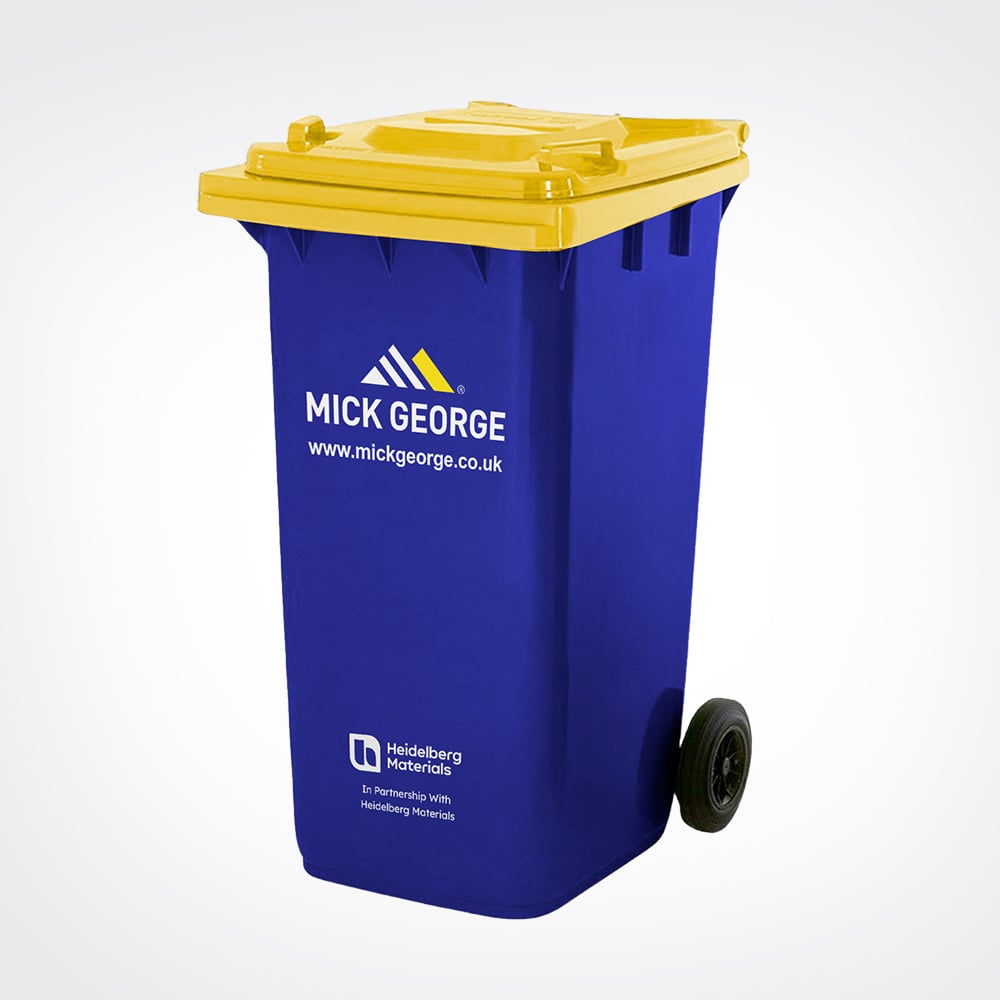
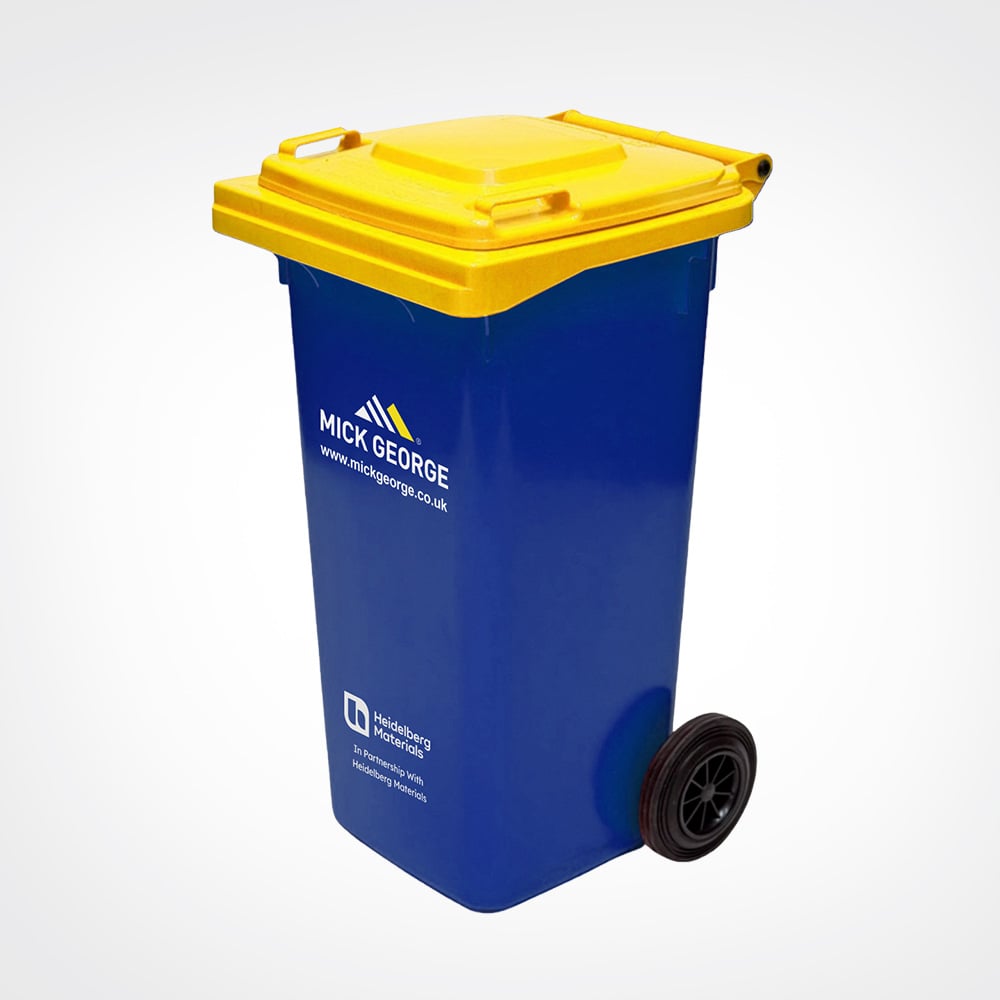
Most pubs and bars need one or more 240 litre glass bins collected daily or several times a week; restaurants and cafés usually manage with a 240 litre bin collected weekly, and small venues with a 120 litre bin. The limiting factor is weight rather than space: a 240 litre glass bin takes up to 50 kg, which is roughly 100 to 120 empty wine bottles, so a busy bar fills one quickly. Collections are available daily, weekly or fortnightly and can be changed as trade varies through the year. Our bin size guide has the dimensions of both bins.
Why are glass bins only available in the smaller sizes?
Because glass is heavy. Mick George supplies glass bins in 120 and 240 litre sizes only, with a 50 kg limit on the 240 litre bin, because a 660 or 1,100 litre bin full of bottles would weigh several hundred kilos, more than the bin lifter on a collection vehicle or a member of staff wheeling it across a yard can handle safely. Smaller bins also reduce breakage and noise and are easier to keep in a cellar or behind the bar. Sites with very high glass volumes are better served by more bins collected more often than by one large container.
How much does a glass bin collection cost?
A 120 litre glass bin costs £8.00 ex VAT per collection and a 240 litre bin costs £9.00 ex VAT, with the bin itself supplied free and no delivery or hire charge. Prices are fixed for 12 months.
Your monthly cost is the per-collection price multiplied by how often the bin is emptied, so a bar on daily collections pays more than a café on weekly. Separating glass is cheaper than leaving it in a general waste bin, where its weight pushes up disposal charges, and it gets a quote that reflects the number of bins and visits your venue needs.
Get the latest news & offers