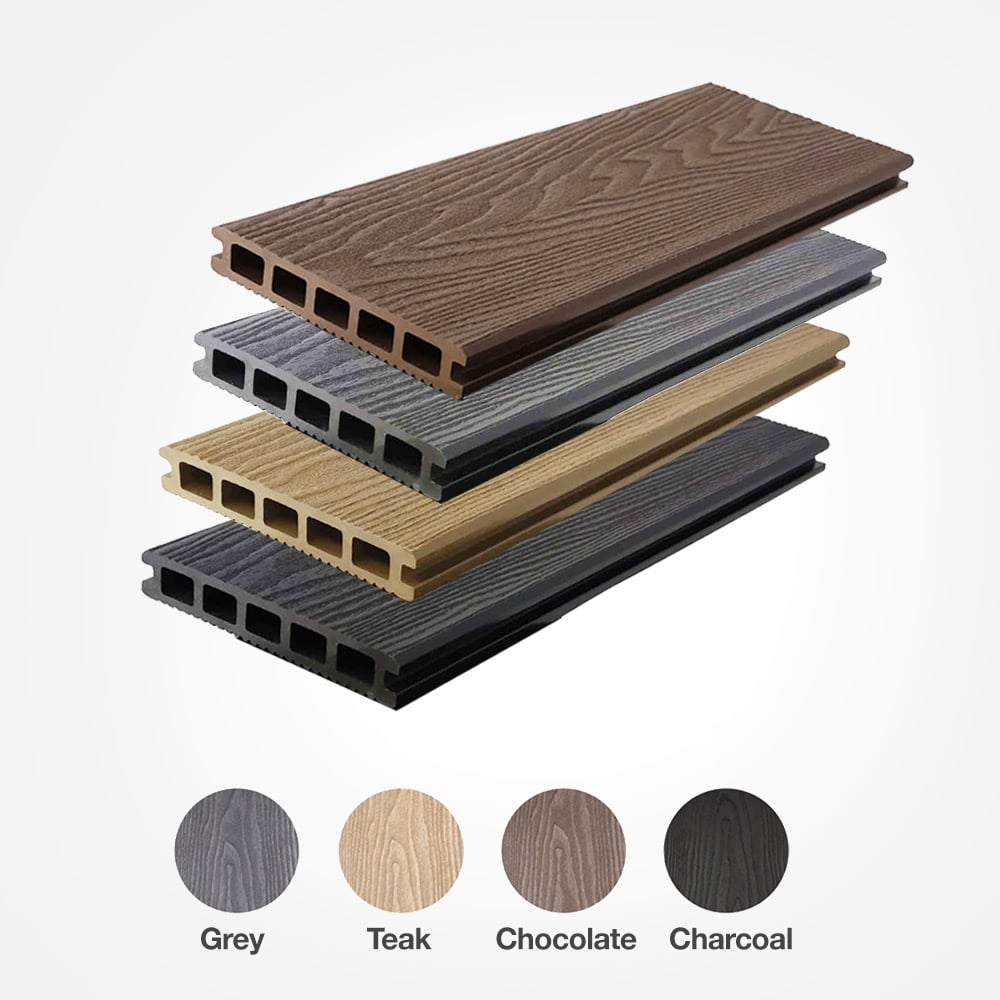
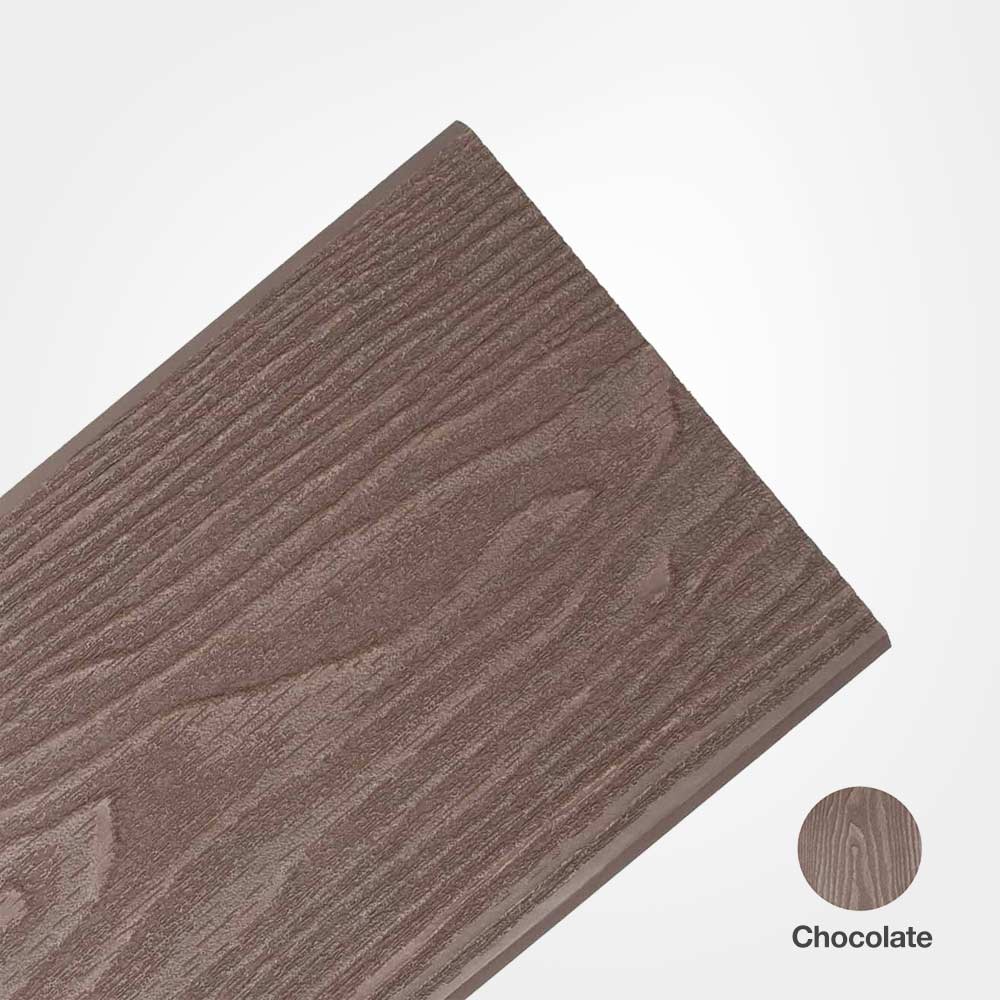
Deck Boards
All our Timber Decking Range is pressure treated to ensure the maximum lifespan. All our decking is carefully selected from graded timber- imported from Sweden or the Baltic States. It is dried in kilns before it is pressure treated to make sure it takes up as much preservative as possible so that it lasts you as long as possible.Material
Colour
Size
Length
Width
Thickness
Density
- Hollow (1)
Price
-
Decking Boards – 32 x 125mm
- 0% Interest Available
- Great Quality & Quick Delivery
From £8.75 Was£9.10From £10.50 Was£10.92 -
Core Composite Decking Board
- Multiple Colours
- Eco Friendly
From £17.60 Was£18.36From £21.12 Was£22.03
Frequently Asked Questions
What are Decking Boards?
Decking boards provide the finished surface of a deck, keep people from falling through between joists, and supporting the weight of people and furniture.
Decking boards are perfect for extending outdoor living areas and can be arranged in different designs, to meet individual preferences.
Decking boards are a great landscaping option for outdoor spaces of any size.
Where are Decking Boards Used?
Decking boards are seen as the ideal way to define different areas of an outdoor space.
Decking provides a great surface for an outdoor seating area, around a swimming pool or maybe a hot tub, plus it is quick and easy to install and fairly cost effective to boot.
What is the cheapest option for decking boards?
Pressure-treated softwood is the cheapest, and our 32 x 125mm boards start at £9.52 against £21.12 for Core Composite. Softwood costs roughly half as much up front, but needs cleaning and re-coating every year or so. Composite costs more and never needs treating, so over a decade the gap narrows considerably. If the budget is fixed, softwood with a decent frame beats composite on a skimped one.
What is the 3/4/5 rule for decks?
It is a way of checking a corner is square using a tape measure rather than a set square. Measure 3 units along one side of the frame, 4 along the other, and if the diagonal between those two points is exactly 5, the corner is a true right angle. Any units work, so 3ft, 4ft and 5ft, or 300mm, 400mm and 500mm. It is the quickest check when setting out a deck frame, and worth doing before any boards go down.
Should 32x125mm treated decking boards be laid grooved side up or smooth side up?
Smooth side up is generally the better choice. The grooves were originally sold as anti-slip, but in practice they trap dirt and water and grow algae, which makes them more slippery than a clean smooth face. The smooth side of our boards is planed with a rounded corner radius, so it is comfortable underfoot and easier to sweep and re-coat. Either face is structurally fine; it is purely a finish decision.
What gap should I leave between timber decking boards?
Leave 5 to 8mm between boards. The gap lets water drain through rather than pooling on the deck, allows air to circulate underneath, and gives the timber room to move as it takes up and loses moisture. Our boards are kiln dried to reduce that movement, but softwood still swells and shrinks with the seasons. Use an offcut or a screw as a spacer to keep the gaps consistent as you work across the deck.
What lengths do 32x125mm decking boards come in?
Four lengths: 3000mm, 3600mm, 4800mm and 5400mm. Choose the length that spans your deck with the fewest joins, as every butt joint needs a joist underneath it and breaks up the run visually. Note the boards are a nominal 32 x 125mm and come out slightly under that after machining, which varies with the weather, so work to the actual board width when setting out rather than the nominal figure.
How do I work out how many decking boards I need?
Divide the width of your deck by the board width plus the gap. A 125mm board with a 6mm gap covers about 131mm, so a 3m wide deck needs around 23 boards per run. Multiply by the number of runs the length requires, then add around 10% for cuts and waste. Order lengths that suit the deck rather than cutting long boards down, and remember to allow for joists, which are sold separately.
Should decking boards be screwed or nailed down?
They should be screwed down. Nails can become loose as the timber expands and contracts through the seasons, and a lifted nail head on a deck is a hazard underfoot. Use exterior-grade decking screws, two per board at each joist, set just below the surface. Stainless or coated screws are worth the extra, as the preservative in pressure-treated timber corrodes ordinary steel. Pre-drill near the board ends to stop the timber splitting.
Do new treated softwood decking boards need staining or oiling before use?
Not immediately, as the pressure treatment already protects against rot and insect attack. A coating is about appearance and surface wear: left bare, the boards weather to silver grey. If you want to hold the colour, let the boards dry out and settle for a few months first, as fresh treated timber is often too damp to take a coating properly. After that, inspect the coating every six months and re-treat at least once a year.
Get the latest news & offers