Sand
Whether as the protective layer for a stunning pond or water feature, a charming play area for your children, or an additive to mortar and concrete for a grand building project, we’ve got you covered when it comes to Sand. We offer Sharp Sand and Washed Building / Soft Sand, both of which have some distinct differences.Home / Aggregates / Bulk Bags / Sand
-
Sharp Sand
- Free Delivery
- Quality Primary & Recycled Materials
From £82.49 Was£94.79From £98.99 Was£113.75 -
Washed Building Sand
- Free Delivery
- Quality Primary & Recycled Materials
From £82.49 Was£94.79From £98.99 Was£113.75 -
Topdressing Bulk Bag
- Quality Primary & Recycled Materials
- Free Delivery
From £197.84 Was£208.49From £237.41 Was£250.19
What is Sand?
Sand is a mixture of small grains of rock and granular materials, predominantly defined by size; finer than gravel and coarser than silt.
Sand comes from many locations, sources, and environments and forms when rocks break down from weathering and erosion, over thousands and even millions of years.
Aggregate materials are obtained from natural mines of sand or sand and gravel, quarries, deposits, and underground sediments.
Sand Benefits
Sand plays an important role within many materials, not least Concrete, where it acts as binding agent. The sand also improves concrete’s most favourable properties such as thermal expansion, compression strength, and tensile strength.
Where is Sand Used?
Aggregates such as sand are used when creating or restoring beaches, sports surfaces, race tracks, and other recreational facilities.
Other Sand applications include inclusion inside cement concrete, asphalt concrete, road foundation, railway track slag, mortar and other construction materials.
Frequently Asked Questions
What's the difference between sharp sand and building sand?
The main difference between sharp sand and building sand is the size and shape of the grains, which determines how each type of sand behaves. Sharp sand is typically used for mixing concrete and laying paving slabs whereas building sand is primarily used for bricklaying mortar.
Can I use building sand instead of sharp sand?
Yes, you can use building sand instead of sharp sand, but only in certain situations. It is not advised that you use building sand for concrete mixes, however you can use building sand instead of sharp sand for applications such as bricklaying, pointing and rendering.
Which sand do I need for laying patio slabs?
Sharp sand is the best choice for laying paving slabs due to its drainage properties. The coarse profile of sharp sand means that it helps to create a firm, well-draining layer beneath your paving slabs, whereas building sand is too fine to achieve the same results.
Which sand should I use for mortar, pointing and rendering?
Use building sand for mortar and pointing, and use sharp sand for rendering. Building sand is great for mortar as its spreads and bonds well. For pointing, building sand will allow you to create a traditional mortar finish. For rendering, sharp sand is commonly used for the base coat.
What does "washed" sand mean, and why does it matter?
Washed sand simply means sand that has been washed with water during processing to remove unwanted fine material such as clay, silt and dust. Washed building sand results in a more predictable mix which leads to better consistency.
Which sand is best under artificial grass?
Due to drainage requirements, the best sand to use under artificial grass is sharp sand. Sharp sand underneath your artificial grass will provide good drainage and a smooth base. Building sand underneath artificial grass is not recommended as it is finer and can retain more water.
Can I use sharp sand to top dress or level a lawn?
Yes, you can use sharp sand to top dress or level a lawn. Sharp sand is suitable when you are making minor corrections, however for general levelling, a top dressing mix would be preferred.
Combining sharp sand with topsoil and compost as a mixture can create faster results.
How much mortar or screed will a bulk bag of sand make?
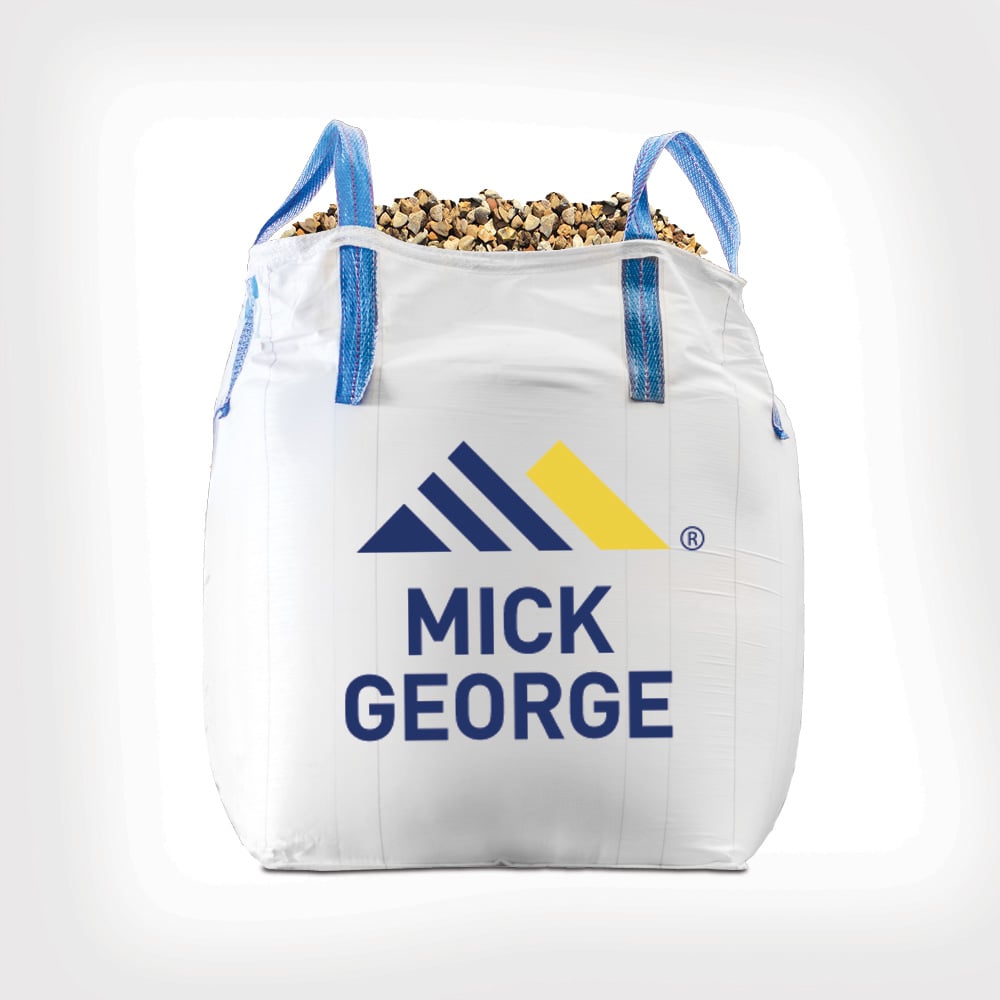
A typical 800kg bulk bag of sand from Mick George will require roughly 250kg of cement to create 600-700 litres of mortar, at a ratio of 4:1 sand to cement mix.
Get the latest news & offers