
Waste Service Enquiry Form
 Order Online
  Explore
  Credit Accounts
 Business Food Waste Collection
More than 1.3 billion tonnes of food waste is generated globally each year, contributing to environmental damage, so it’s important that businesses do their part to operate sustainably, while reducing waste management costs.


What is Food Waste?
Food waste is any lost or uneaten food that occurs at any stage of the food production chain. This could be unusable by-products and offcuts during production, damaged goods throughout transportation, mishandling that causes unsellable produce, or simply food produced but not consumed.
Responsible food waste disposal keeps it away from landfill and avoids contaminating other waste streams, which consequently reduces waste management costs.
Regular waste food collection helps your business get rid of leftovers, spoiled, and inedible food items efficiently. This prevents bins from overflowing with rotten food, foul odours developing and ensuring hygiene standards are maintained.
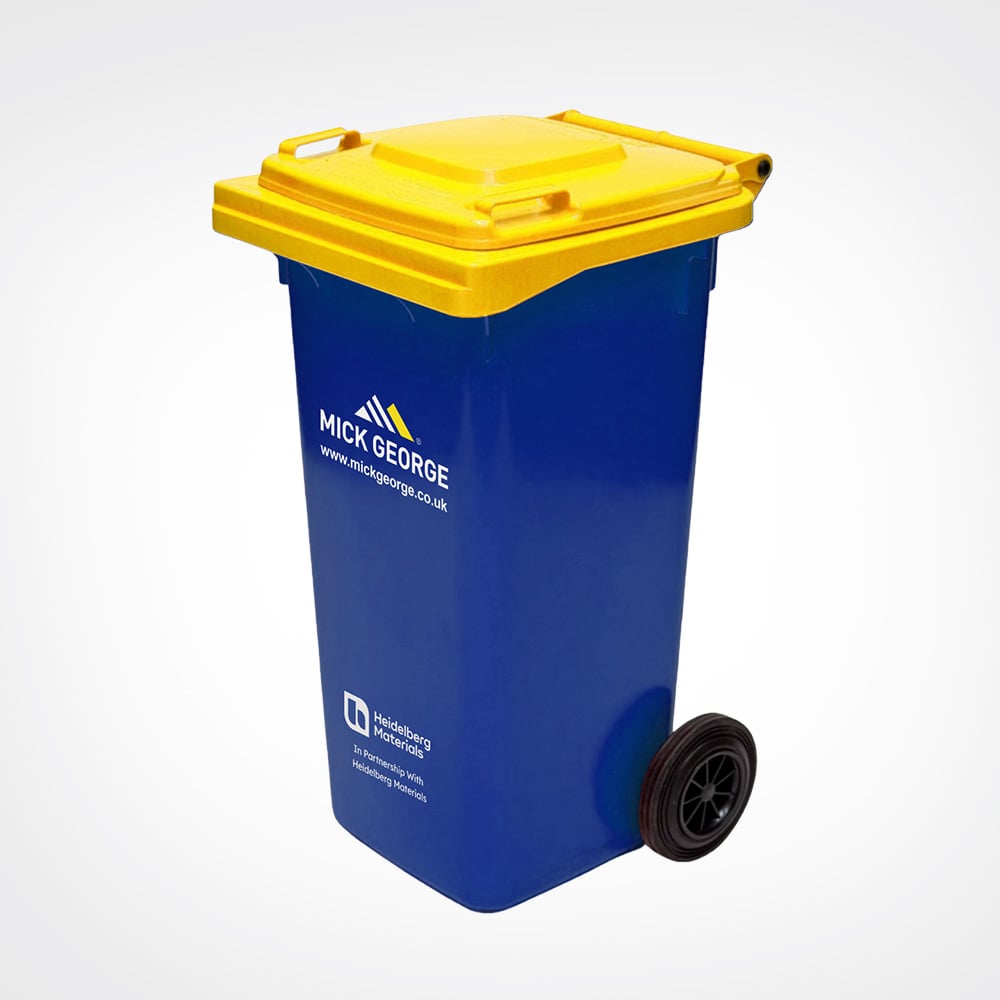
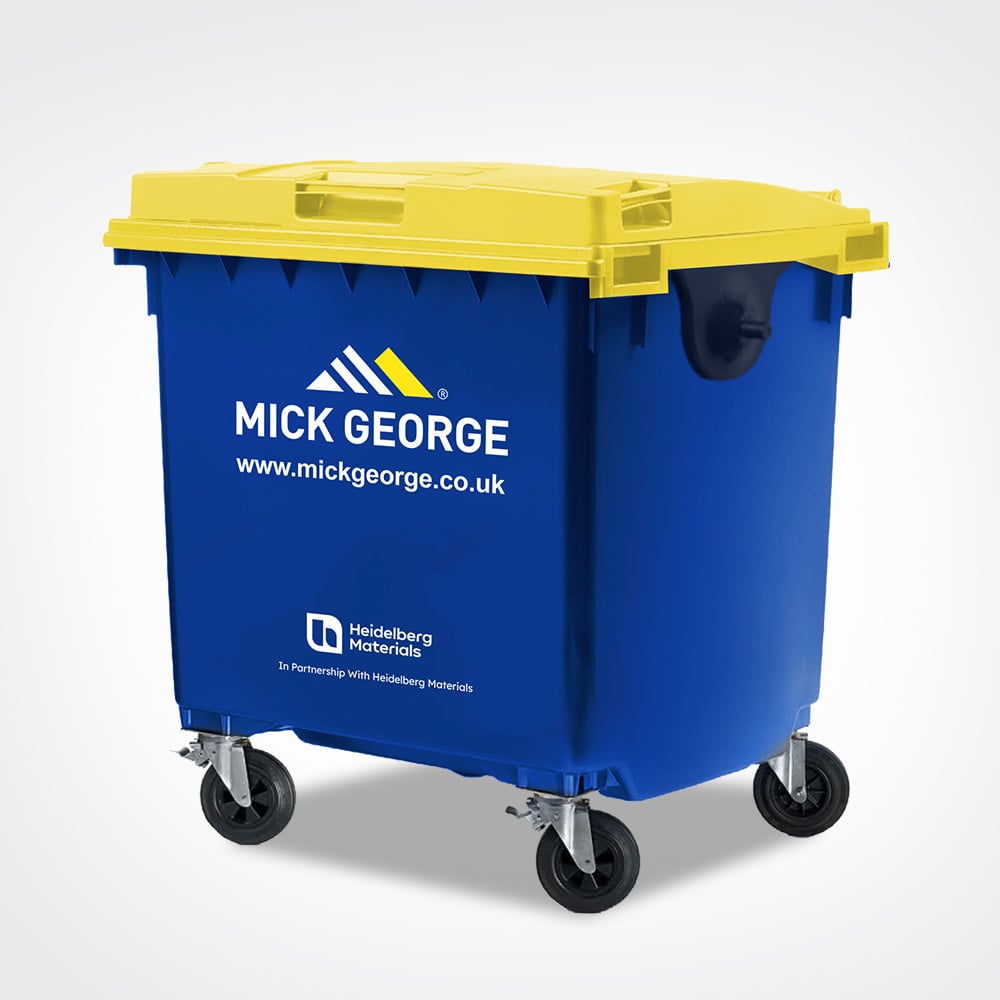
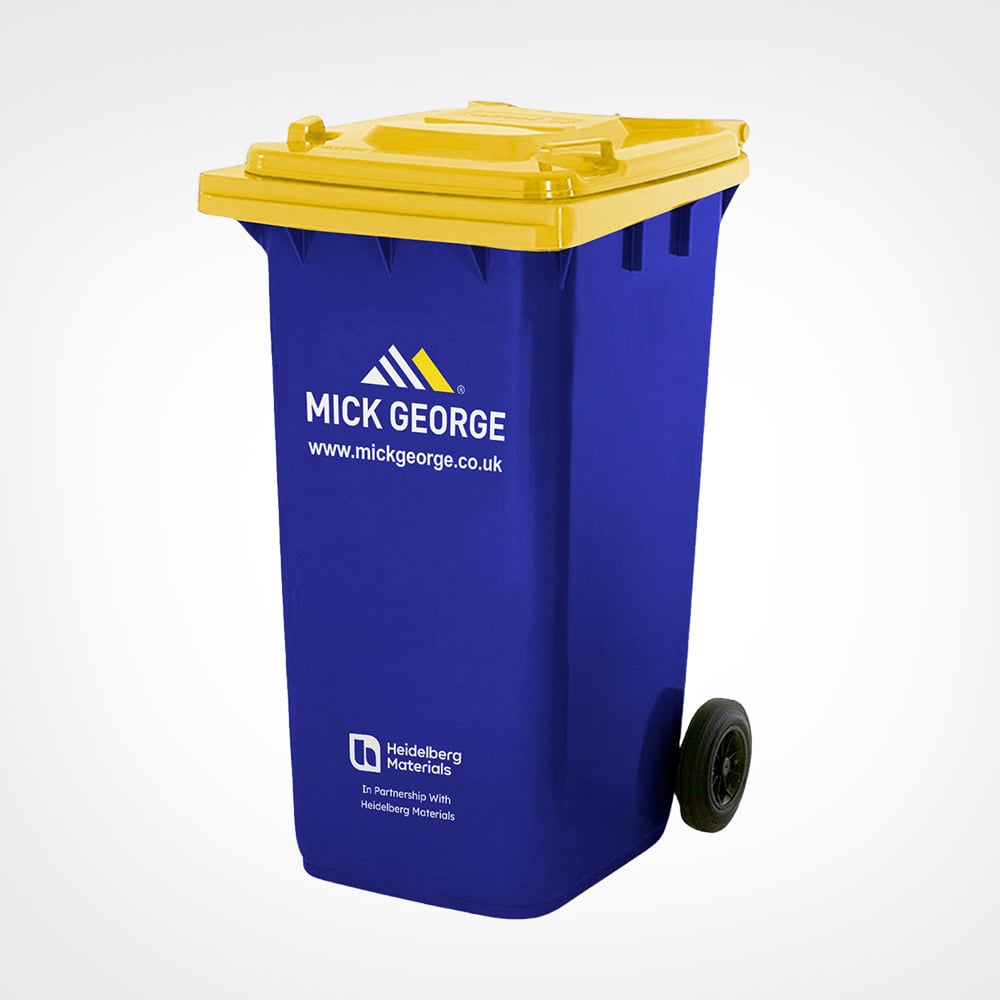
Mick George Recycling can provide a wide range of free food waste bins for businesses throughout Cambridgeshire, Peterborough, Northamptonshire, Leicestershire and Milton Keynes area, with no delivery or hire charges – you only pay for collection.
Available in various sizes with flexible collection schedules, we can help whatever you need. Restaurants, hotels, and commercial kitchens could benefit from daily removals while offices may only need weekly waste food collections as they’ll likely produce smaller volumes.
Book Your Food Waste Bins
Why use Mick George for Food Waste?
Simplify your waste management with Mick George commercial food waste recycling services and benefit from:
- Free bins: store waste food securely in wheelie bins and containers with no delivery or hire charges as you only pay for collection.
- Landfill diversion: all food waste is disposed of away from landfill via anaerobic digestion or composting.
- Regular collection: daily, weekly, and fortnightly food waste collections keep your site clear and provide reliable removals.
- Affordable prices: strategically located to offer bespoke and cost-effective prices.
- Great customer service: add bins, change collection frequencies, and get help for any queries with our expert and friendly team.
See Our Commercial Waste Service


Food Waste Recycling
There are two main methods of recycling food waste, composting and anaerobic digestion (AD). Another option to recycle waste food is to use it as animal feed so it’s technically reused. Commercial food waste recycling converts the materials into energy or fertiliser and keeps it away from landfill sites.
These are the basic processes for food waste recycling:
- Composting: food is transported to large industrial compost sites. It may be mixed with other organic waste (such as garden waste) and laid out in large piles. Temperature control, humidity, and airflow levels are checked and regulated to speed up the process, which creates fertiliser and compost for farms, gardens, and other uses.
- Anaerobic digestion: this method of commercial food waste recycling breaks down food products due to the absence of light and oxygen. It’s put in a tank with no oxygen as microorganisms break it down. The process produces biogas, which is captured and turned into energy and biofuel, with the leftover material forming biofertilizer.

Who Needs Food Waste Collection?
Under the new Simpler Recycling regulations, every business with ten or more full-time employees must have separate food waste collection and disposal in place by the end of March 2025.
Some of the main businesses that require commercial food waste collection include:
- Bakery: waste ingredients and by-products from production
- Catering: excess food and out-of-date items
- Hotels: kitchen food waste and leftovers from customers
- Pubs and clubs: waste food from food production and clientele
- Restaurants: leftover food from customers and meal prep
- Takeaways: out-of-date products and excess food

What Can You Put in a Food Waste Bin?

What Can You Put in a Food Waste Bin?
You can put a wide variety of waste from your business in a food waste bin. This includes plate waste and leftovers, peelings and preparation, and spoiled or damaged food items in a shop.
It should be used solely for waste food items. You must not put any liquids, packaging, or garden waste in a food waste bin.
Some common things you can put in a food waste bin include:
- Fruit and vegetables
- Meat and fish
- Dairy
- Bread, pasta, and rice
- Eggs and eggshells
- Tea and coffee
Tel: 0800 587 3329 Email: mgsales@mickgeorge.co.uk


Go Green
Waste Management
We have always received a reliable and professional Waste Management service. They help to provide modern, forward-thinking and sustainable Waste Management processes which are vital in our constantly evolving industry. We would highly recommend the Mick George Group to anyone requiring a fully compliant Waste Management service.
Fletchers Waste Management
Waste Management
We have worked with the Mick George Group on a number or projects and always been offered excellent service and competitive pricing. Their customer service team are always on hand to help with any issues and are extremely friendly and easy to deal with. Finally, their state-of-the-art facilities situated throughout the UK mean that all your waste is dealt with in a compliant and ‘eco-friendly’ manner.

Morgan Sindall
Waste Management
We find the Mick George Group very easy to deal with, their customer service is always great and their quick turnaround times on exchanges, keeps our sites running smoothly. We wouldn’t hesitate to recommend them.
Latest Waste Industry News
-

New Commercial Waste Bin Collection Service
The Mick George Commercial Waste Bin Collection service is now open for customer onboarding, with collections scheduled to commence from January 2026.
-

15.3% Decrease in Residual Landfill Waste
Residual waste sent to landfill decreased by 15.3% between 2019 and 2023, according to recent reports.
-

Landfill Tax Reform
The British Aggregates Association (BAA) is alerting members and stakeholders to a consultation recently launched by the Government regarding reforms to Landfill Tax.


Get the latest news & offers