
Plasterboard is a panel made of calcium sulphate dihydrate (gypsum) usually pressed between a facer and a backer which is used to make interior walls and ceilings.
What is plasterboard?
Plasterboard is a panel made of calcium sulphate dihydrate (gypsum) usually pressed between a facer and a backer which is used to make interior walls and ceilings. Plasterboard is often used by builders and designers as it helps both parties meet building regulations for fire protection, acoustic insulation, and thermal efficiency. Plasterboard can also help to control condensation and potential damage in areas of high humidity due to its thermal traits.
What is Plasterboard made of?
Plasterboard is made out of ‘gypsum’. The manufacture of plaster and plasterboard is derived from a number of sources, either natural and synthetic.
Natural Gypsum – in the natural form of a rock located in the United Kingdom.
Synthetic Gypsum – as a by-product of several industrial processes.
What is plasterboard used for?
Most the time, plasterboard is used for the construction of interior walls and ceilings which can be modified to become either fire resistant, humidity resistant or noise resistant.
Plasterboard is mostly found in the following locations:
- Old people’s home
- Schools
- Shops
- Flats or residential buildings
- Office buildings
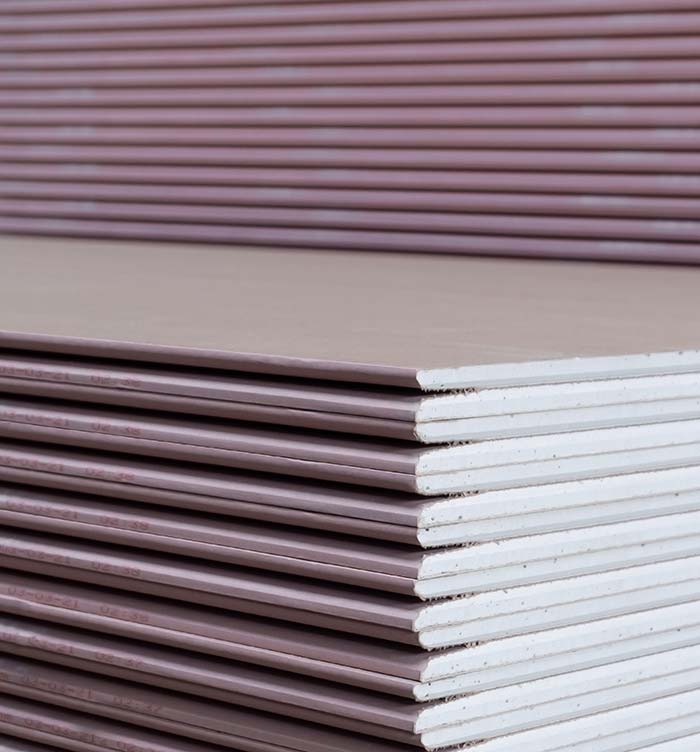
Different sizes of Plasterboards
Plasterboards can come in all different sizes, dependent on your project.
Typical sizes of plasterboard are:
- 1800mm x 900mm
- 2700mm x 900mm
- 2400mm x 900mm
- 2700mm x 1200mm
- 3000mm x 1200mm
- 2400mm x 1200mm