
Although all plasterboard is used for lining or constructing new walls, there is a bunch of different types to pick from within our range.
The different variations of plasterboard
Although all plasterboard is used for lining or constructing new walls, there is a variety of different types to pick from within our range. Plasterboard is predominantly used for a wall or ceiling, but you may want to think about which plasterboard you are going to use to achieve a certain performance.
Plasterboards have several different variations and are generally differentiated by their features, below is a list to help you identify which plasterboard best serves your purpose:
Sound resistant plasterboard: provides you with great sound insulation due to the dense layer of gypsum deep inside it, making it extremely useful if you are requiring the room to be sound resistant.
Fire-resistant plasterboard: is a useful plasterboard for flats and shared buildings due to the fact it can withstands fire for longer to allow for a safe evacuation.
Moisture resistant plasterboard: For wet areas of the house such as your kitchen or bathroom, the moisture resistant plasterboard is an exceptional option. This plasterboard helps protect walls and ceilings from high humidity, preventing damage in your wet areas.
Vapour resistant plasterboard: is designed to be used where warm and cold elements of walls and ceilings join and water vapour control and a plasterboard lining are required in one fixing application.
Insulated plasterboard: is a great plasterboard for people looking to save money, with it being used on internal walls to enhance the thermal performance without adding too much depth to the wall. So, this will stop the heat inside your house escaping through one wall or another.
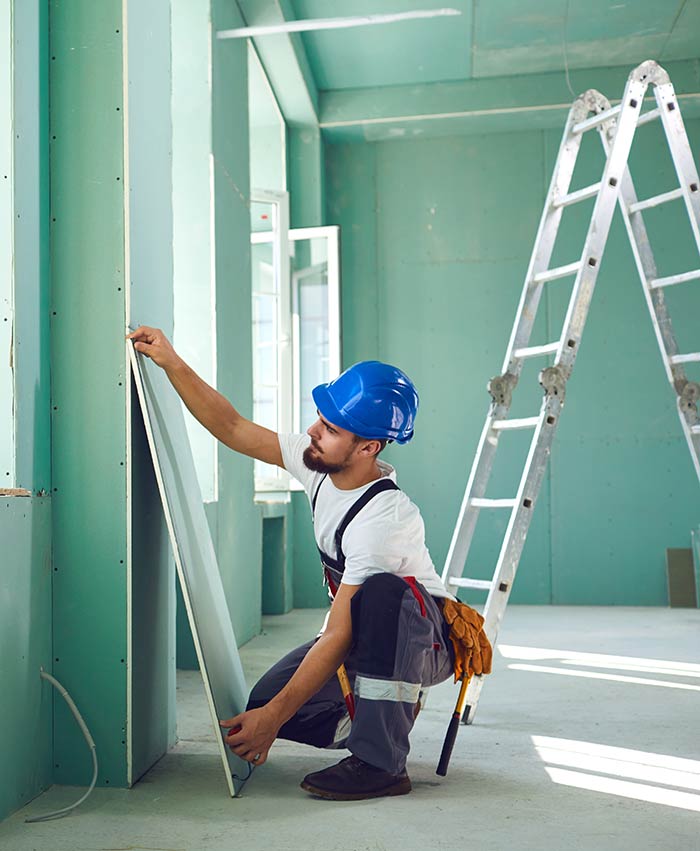
Dense Plasterboard:
If you are requiring impact-resistant plasterboard, then look no further than dense plasterboard. Dense plasterboard is predominately found in public places such as schools, hospitals, and train stations because people are likely to congregate in these areas.
External plasterboard:
By using completely water-resistant plasterboard, you can make external walls more efficient but on the outside of a building. Using this plasterboard will protect the integrity of the building because it’s structure can easily handle any weather condition.
Plank plasterboard:
Plank plasterboard is a thicker variation of plasterboard which is useful for when the thickness of the walls is not such an issue, such as stairwells and hallways for example. This also provides a great level of sound insulation and even a good level of fire resistant as well, making it perfect for schools.
The Mick George Group has a huge range of plasterboard options to choose from dependant on the size and scale of your project, browse our range today!
Check out our plasterboard range