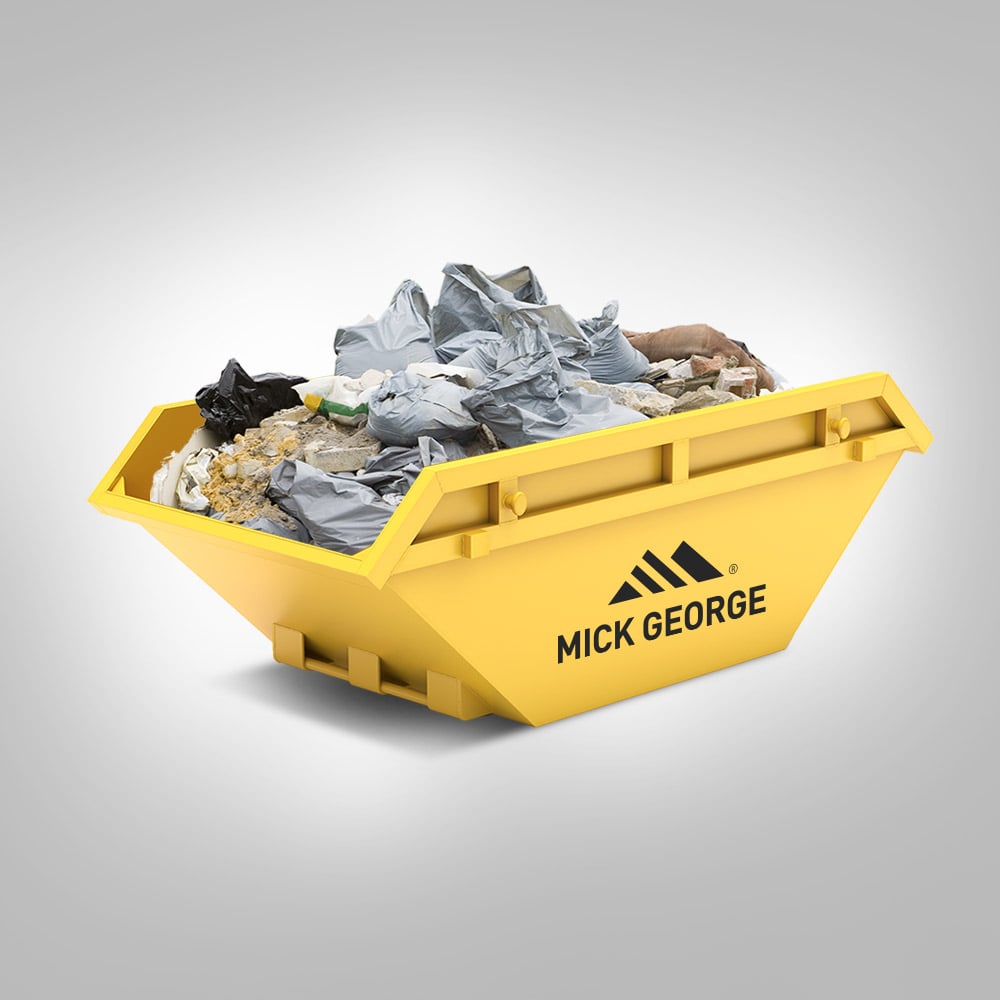


Avoiding overfilling a Skip is the best way to save money on your Skip hire, so we’ve put together a handy guide on how to fill your Skip effectively.
How to load a General Waste Skip
Filling a Skip effectively can be challenging, with lots of items of different shapes and consistencies. Overfilling a Skip can also be a problem; either you’ll incur extra charges as a penalty, or you’ll need to purchase a second Skip, neither of which is ideal. Avoiding overfilling a Skip is the best way to save money on your Skip hire, so we’ve put together a handy guide on how to fill your Skip effectively.
1) Layer
The key to effectively filling a Skip is to layer the different items you have. This works most effectively with General Waste Skips that can be filled with a different assortment of waste types. Different types of waste will need to go into the Skip at different points during your Skip filling process. Organising your waste into these separate categories will make the job a lot easier when it comes to filling the Skip. You should sort your items into the four categories below:
- Flat items
- Objects that will stack (such as bricks, tiles etc.)
- Large or bulky items
- Loose debris
It’s best to cut down the size of any of the larger items as much as you can, as this will help to make it easier to stack in to your Skip. This can be managed by breaking these bulkier items down into smaller parts wherever possible. A lot of furniture, for example, can be disassembled into separate bits, it’s time to disassemble that flat-pack furniture!
2) Flat items
Once you’ve taken apart your bulkier items and have organised your remaining items, it’s time to start filling the Skip with your flat items.
The first items to put in your Skip are the flat items. These are items like cardboard, wood or plasterboard that will fill the bottom and can be easily squashed down by items on top. Ensure that any boxes are flattened before placing them in the Skip. If you have a large amount of these items, you can place them around the sides of the Skip in addition to the bottom.
3) Tessellate objects
Items like bricks that will easily fit together should be placed in next. Try to fill the base with these objects as it will create a flat surface. If you can’t fill the entire base evenly, leave a space suitable for some of your bulkier items.
4) Bulky items
Bulkier items such as furniture or appliances should go into the Skip next. These items should be broken down into their smallest parts if at all possible. Place the items as best you can so that they create layers, rather than trying to stack everything in at once. Use as much of the space provided as you can!
5) Loose Debris
Finally, any loose debris you have should go on last. Loose debris refers to materials made of small particles such as gravel, sand or soil. These should go on last as they will generally fill all the available pockets of space that larger items can’t fill. Remember not to overfill or your Skip won’t be collected.
Now you know how to best fill your Skip to make the best use of the space available. If you haven’t already, hire a Skip from Mick George today!
Hire a Skip today