Trial Pits & Boreholes
Before any construction project takes place, the ground conditions and soil composition must be worked out to determine whether the proposed construction is feasible or not. This is often done by excavating a trial pit and using borehole drilling.


Trial Pits
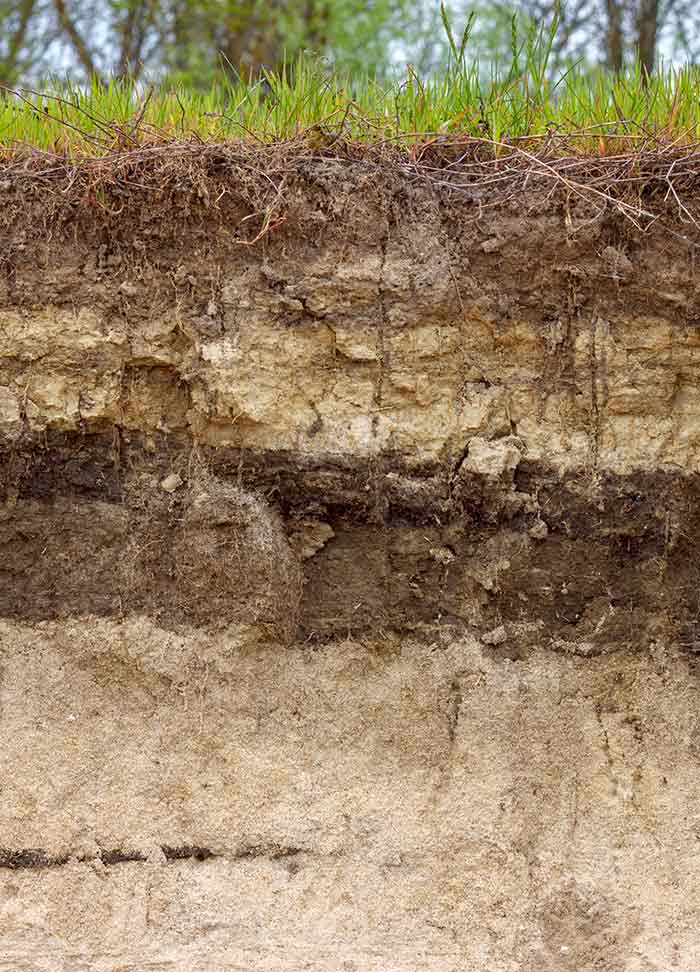
Before any construction project takes place, the ground conditions and soil composition must be analysed to determine whether the proposed construction work is feasible or not. This is often done by excavating a trial pit, either by hand or more commonly, by machine. It’s a simple and cost-effective means of geotechnical site investigation that the Mick George Group can complete to certify the suitability of the setting prior to any project commencing.
Trial pits are commonly used to investigate shallow ground conditions and can be particularly useful where buried structures, variable conditions or contamination is suspected or needs further investigation.
What is a Trial Pit?
Trial Pits are pits of between 1-4 metres depth. For pits deeper than 1.2 metres, Building and construction regulations clearly state that structural measures must be put in place to ensure the safety of anyone who has to enter it. If there’s known to be any underground features (gas pipelines, electricity cabling etc.) then the means of excavation must be by hand and not by machine for safety reasons
Trial pits (or trenches) can be more cost-effective than boreholes but they cannot reach the same depth. Trial pits can also excavated relatively quickly.
Machine Excavated Trial Pits
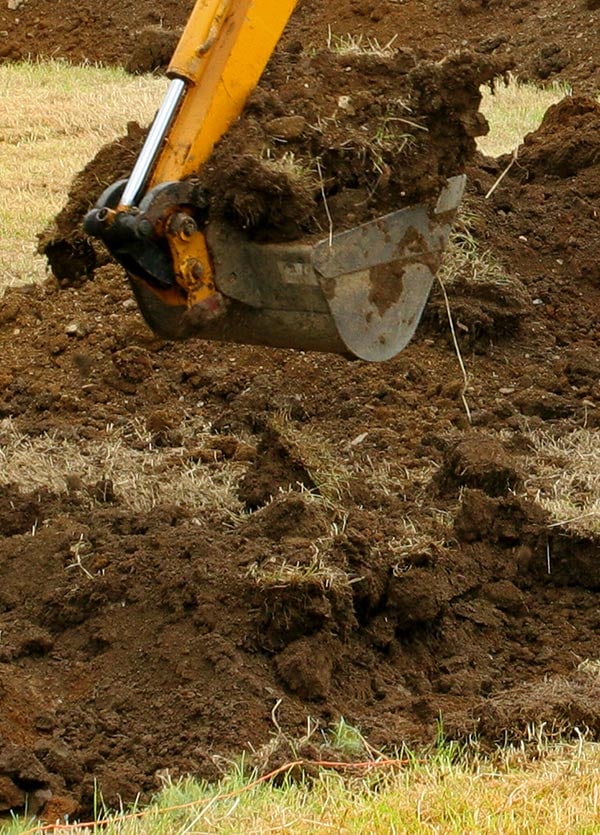
Machine Excavated Trial Pits are one of the more common methods of Trial Pitting, using a tracked 360° excavator or a hydraulic wheeled backhoe loader, generally excavating to a depth of up to 4.5m.
This allows ground conditions across a large area to be assessed quickly and allows both the vertical and horizontal faces of the Trial Pit to be examined.
Machine Excavated Trial Pits are generally undertaken when the Clients requirements may include:
|
|
Hand Dug Trial Pits
Hand Dug Trial Pits are dug using hand digging tools generally to a maximum depth of 1.20m and are ideal on small scale Site Investigations for obtaining near surface soil samples, exposing foundations and locating any underground services that may be on site.
Hand Dug Trial Pits are generally undertaken when the Clients requirements include:
|
|
Trial Pit Benefits
- Enables multiple disturbed and undisturbed samples to be taken
- Vane, Shear, Infiltration and Contamination testing
- Comprehensive soil strata profiling
- Subsurface samples: vertically & laterally
- Real time changes can be conducted easily
- Establish foundation strength
- Mitigate expectancies
- Accurate budgeting and schedules

Borehole Drilling
There’s a variety of uses for a borehole that can benefit everybody from sciences and engineering to businesses and individuals. Borehole Drilling is the creation of a narrow, deep hole in the ground known as a borehole. There are several different methods to drill a borehole and the best method for drilling often depends on the location of the site itself. This is usually compressed air or drilling fluids.
The Mick George Group has extensive experience in completing both borehole and trial pit production, as part of any wider site investigations.
Site Enabling Service



Balfour Beatty
Earthworks Testimonial
The Mick George Group are carrying out works to an excellent standard in terms of safety, quality and programme. The Team are continually collaborating well with the Balfour Beatty project team with on-site operations and exploring value engineering opportunities.

C3 Construction
Earthworks Testimonial
The Mick George Group are one of our preferred suppliers and it's down to their competitiveness, reliability, product knowledge and excellent customer services. We can always trust that works are completed efficiently and to the best standard.
Latest Earthworks & Construction News
-

Mineral Products Leading Sustainable Growth
A recent industry wide report has found that on average, everyone in the UK relies on around 5.8 tonnes of mineral products each and every year.
-

Cement industry reports 25% CO2 reduction
A new global report finds that the cement industry has reduced the CO2 intensity of cementitious products by 25% since 1990.
-

Demand for circularity in construction on the rise
A recent report asked 500 UK decision makers from the UK construction industry to share their views regarding sustainable material solutions.

Get the latest news & offers