Piling Foundations
Piled Foundations are columns that are driven into the earth to transfer the weight of the building through less stable sub soils until sufficient weight bearing strata is encountered.


Piling Foundations
If you have ever wondered how tower buildings stand up, then part of the answer could be piled foundations.
For instance, the world’s tallest building, the Burj Khalifa in Dubai (829m high) used 45,000 cubic metres of concrete to construct 192 piles, each buried 50m into the ground.
A pile is a long cylinder of a strong material such as Concrete that is pushed into the ground to act as a steady support for structures built on top of it. These Piled foundations are used to transfer the weight of the building through less stable sub soils until sufficient weight bearing strata is encountered.
When are Piled Foundations used?
Pile foundations are used in the following situations:
- When there is a layer of weak soil at the surface: This layer cannot support the full weight of a building, so the loads of the building have to bypass this layer and be transferred to the layer of stronger soil or rock that is further below this weaker layer.
- When a building has very heavy, concentrated loads, such as in a high rise structure, bridge, or water tank.
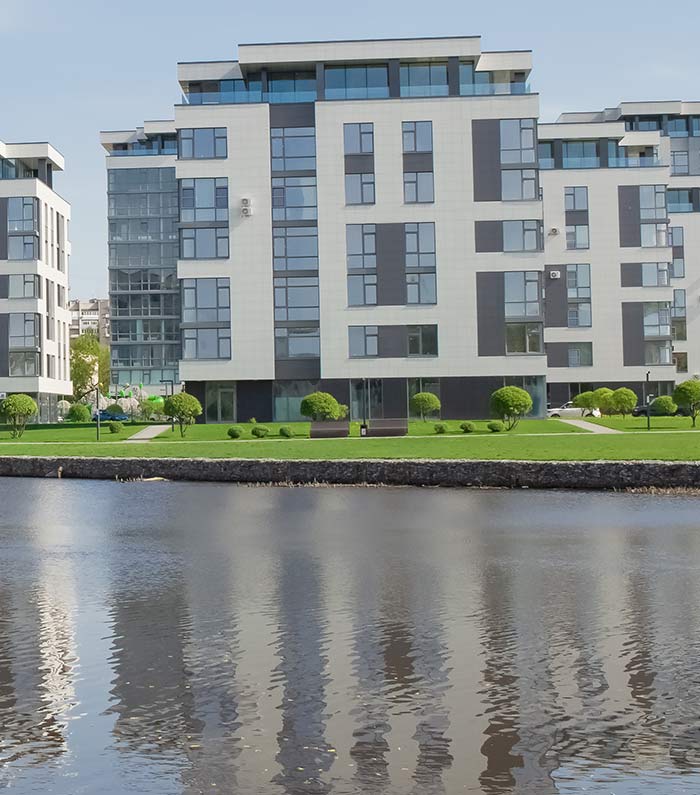
Pile Foundation Types
The Mick George Group have extensive experience in completing various pile foundations, including but not limited too driven, bored, screwed, micro, geothermal and replacement piles.

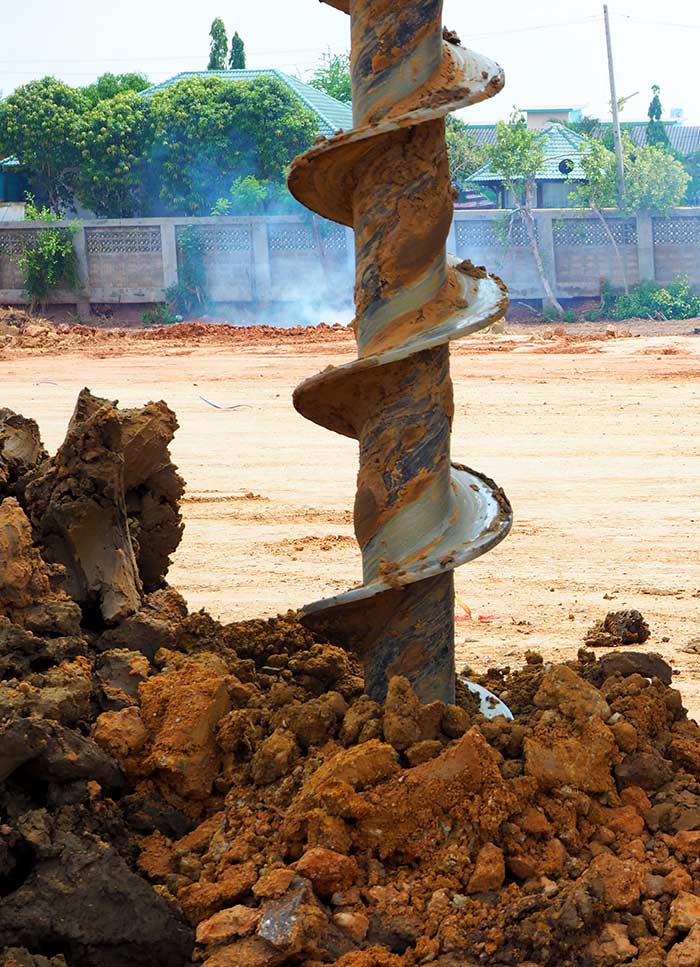
Pile Foundation Equipment
Percussion drivers: hammers driven by steam, compressed air or diesel.
Hydraulic drivers: hydraulic rams push piles into the ground.
Vibratory drivers: piles are vibrated into the ground.
Rotary augers: used to screw replacement piles into the ground.
What are Pile Foundations made of?
Piles can be made of wood, concrete, or steel.
In traditional construction, wooden piles were used to support buildings in areas with weak soil. Wood piles are still used to make jetties. For this, one needs trees with very straight trunks. The pile length is limited to the length of a single tree, around about 20m, since you can’t join together two tree trunks.
Concrete piles are precast, made at ground level, and then driven into the ground by hammering. Steel H-piles can also be driven straight into the ground. These can take very heavy loads, and save time during construction, as the pile casting process is removed. No protective coating is given to the steel, as during driving, this would be scraped away by the soil. In areas with corrosive soil, concrete piles should be used instead.



Balfour Beatty
Earthworks Testimonial
The Mick George Group are carrying out works to an excellent standard in terms of safety, quality and programme. The Team are continually collaborating well with the Balfour Beatty project team with on-site operations and exploring value engineering opportunities.

C3 Construction
Earthworks Testimonial
The Mick George Group are one of our preferred suppliers and it's down to their competitiveness, reliability, product knowledge and excellent customer services. We can always trust that works are completed efficiently and to the best standard.
Latest Earthworks & Construction News
-

Mineral Products Leading Sustainable Growth
A recent industry wide report has found that on average, everyone in the UK relies on around 5.8 tonnes of mineral products each and every year.
-

Cement industry reports 25% CO2 reduction
A new global report finds that the cement industry has reduced the CO2 intensity of cementitious products by 25% since 1990.
-

Demand for circularity in construction on the rise
A recent report asked 500 UK decision makers from the UK construction industry to share their views regarding sustainable material solutions.

Get the latest news & offers