
One of the most common materials used for making ceiling tiles between the 1950s and 1980s was Asbestos
Asbestos Ceiling Removal
One of the most common materials used for making ceiling tiles between the 1950s and 1980s was Asbestos. The Mick George Group are experts in Asbestos Ceiling Removal.


Asbestos in Ceilings
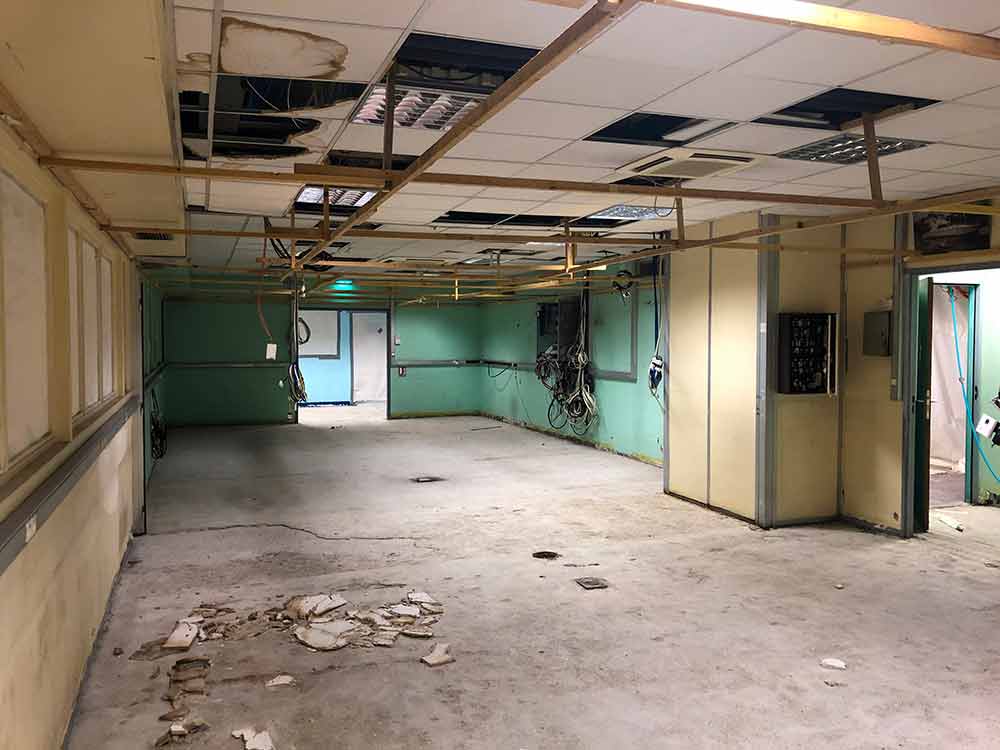
One of the most common materials used for making ceiling tiles between the 1950s and 1980s was Asbestos. It was often used in the construction of the tiles themselves as well as in the adhesives used between the tiles and the insulation under the tiles. Ceilings with Asbestos tiles might be recognised by several names, including drop ceilings, suspended ceilings and acoustic ceilings.
Even in older homes that do not have ceiling tiles, ceilings may still contain Asbestos and especially during this same time period, asbestos popcorn ceilings were very popular.
How do I know if I have Asbestos in my ceiling?
Up until the mid 1980s, Artex coating was made with white Asbestos (chrysotile) which was used to strengthen it. Therefore, it is likely that if your home has an Artex ceiling that was installed before that time period, it will most probably contain Asbestos. Asbestos was banned in the UK in the year 1999, so any Artex coatings applied after then may not contain Asbestos.
Asbestos-containing ceiling products were common in schools, universities, warehouses and hospitals. In the home, Asbestos-containing ceiling tiles were common in kitchens and basements to cover ductwork.
How do I know if my ceiling contains Asbestos?
However, it’s difficult to tell just by looking, so the only way to know for sure is to retrieve a sample of the ceiling and have it tested for Asbestos. We would recommend you contact a licensed professional organisation such as the Mick George Group to have this done to prevent any exposure. You would only need to do this if you are planning on doing any kind of renovation or DIY work that may disturb or damage the ceiling.
Is Asbestos in my ceiling dangerous?
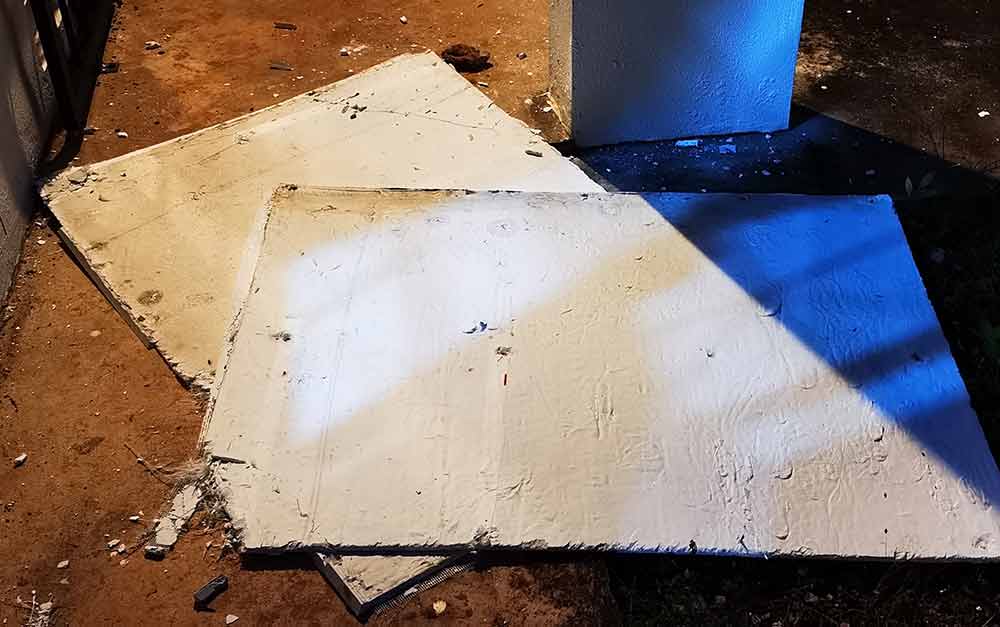
Asbestos ceiling tiles are considered to be relatively low risk as the Asbestos fibres are woven into the tile. However, if the ceiling tiles get broken or damaged or have begun to crumble, this releases harmful Asbestos particles into the air that can be hazardous to health. If you suspect the presence of Asbestos ceilings in your property, it is always safest to contact a trained professional to see if any action is necessary.
Find out more about Asbestos Removal
One of the most common materials used for making ceiling tiles between the 1950s and 1980s was Asbestos
Contact the Experts
Discovering that there may be Asbestos ceilings in your residential or commercial property can be a worry. If you have concerns about Asbestos ceiling tiles or materials, get in touch today.
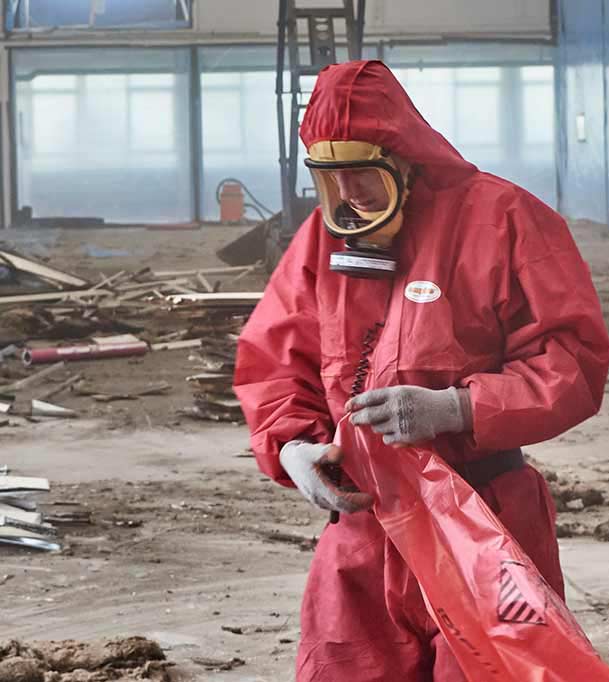
When removing Asbestos ceiling materials, our highly trained professionals seal off the area, creating an airtight space to capture particles. If deemed necessary, air monitoring practices may be employed to guarantee that the area is safe for reoccupation once the Asbestos has been removed. All removed Asbestos ceiling tiles will be double-bagged and sealed, safely labelled, handled and disposed of at our licensed waste disposal site.
Mick George Environmental are fully licenced by the Health and Safety Executive (HSE) and ARCA – the Asbestos Removal Contractors Association.
With all services in-house, our highly skilled and experienced team can provide a ‘start to finish’ service, saving you time and money.
Got any questions? Head on over to our Asbestos FAQs and find your answer. If not then contact our expert team using the contact form.


Fusion Project Managment
Waste Management
On behalf of the College’s Head of Estates and I, we would like to state how extremely pleased we both are with how the Environmental works have been managed.

Peter Smith Associates
Waste Management
The efficient service and endeavour to go beyond the original scope of works has meant that the Environmental works have been conducted smoothly from start to finish. Thanks to all your team for their professionalism and friendliness.
Latest Environmental & Construction News
-

Mineral Products Leading Sustainable Growth
A recent industry wide report has found that on average, everyone in the UK relies on around 5.8 tonnes of mineral products each and every year.
-

Cement industry reports 25% CO2 reduction
A new global report finds that the cement industry has reduced the CO2 intensity of cementitious products by 25% since 1990.
-

Demand for circularity in construction on the rise
A recent report asked 500 UK decision makers from the UK construction industry to share their views regarding sustainable material solutions.


Get the latest news & offers