Concrete Calculator
Use our Concrete Calculator to determine what volume of Concrete you require, to ensure you don’t run short or incur any wasted materials.


How Much Concrete Do You Need?
Having identified the requirement for Concrete, the next stage is to determine what volume of Concrete you require for your job.
Use our handy Ready Mixed Concrete Volume Calculator to calculate the volume of Concrete.
Simply, select your preferred Concrete Mix for your application (more details can be found here), and then input the appropriate dimensions of the coverage area.
While every effort is made to ensure the Concrete Calculator gives you the most accurate volume, there will be instances where we will need to round up/down your measurements. Purchasing slightly more Concrete than the estimated result can reduce the probability of having insufficient materials.
Concrete Volume Calculator

Concrete Volumes
Concrete is usually ordered in cubic metres. The standard Concrete Calculation is typically: Multiply the width, length and depth of your area for the m³ Concrete Volume.
Conversions = 1.3 cubic yards per m³ and 35.3 cubic feet per m³.


Concrete Calculator
One of the difficulties in calculating how much Concrete you need is often due to the different shapes that needs the Concrete applying. To ease this process, we’ve identified some of the more common shapes and the appropriate Concrete Calculations below.
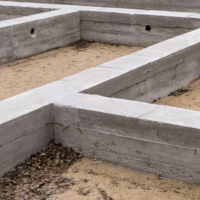
Calculate the Concrete Volume for a square Concrete Slab and Footings by measuring:
- Length: The length of the longest edge of the intended slab
- Width: The length of the shortest edge of the intended slab
- Depth: The depth that your slab will be
Calculate the Concrete Volume for a round Concrete Slab and, or columns by measuring:
- Diameter: The total diameter across the widest point of where your column or slab will be
- Height: The height of your intended round slab or column

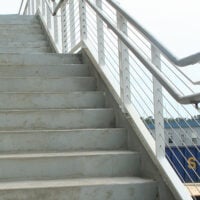
Calculate the Concrete Volume for Concrete Stairs by measuring:
- Platform Depth: Length of the shortest edge of the top step, which is often larger than the other steps
- Rise Height: Height of an individual step
- Run Depth: Length of the shortest edge of an individual stair
- Width: Length of the longest edge of an individual stair
- Number of Steps: Total number of steps, including the platform stair at the top
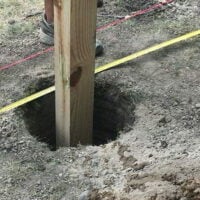
Calculate the Concrete Volume for filling Fence Post Holes:
- Radius: First, measure the diameter across the widest point of your intended fence post hole, and then halve the figure to calculate the radius
- Height: The height of your intended fence post

Hawkes Group
Concrete Testimonial
Hawkes and the Mick George Group have built a great working relationship, with the company always doing their best to fulfil our order requirements. Their huge fleet of vehicles can handle any sized project. We're hoping to work together for many more years to come!

JJ Mac Ltd
Concrete Testimonial
Always a pleasure dealing with the Mick George Group. They always go the extra mile to make sure we get the service we order on time and at the best rates. All our managers and site support staff really appreciate the prompt and efficient service.

L Petriello Contractors
Concrete Testimonial
The Mick George Group have supplied our Aggregates, Concrete and Skip Hire for many years. Their service is fantastic and has always been without problem. We Would definitely recommend their services to others.
Latest Concrete Industry News
-

Cement industry reports 25% CO2 reduction
A new global report finds that the cement industry has reduced the CO2 intensity of cementitious products by 25% since 1990.
-

Demand for circularity in construction on the rise
A recent report asked 500 UK decision makers from the UK construction industry to share their views regarding sustainable material solutions.
-

Street Works UK: Material Classification Protocol Changes
A material classification protocol is a framework for identifying and sorting materials, such as excavated waste, to determine if they are hazardous or non-hazardous.



Get the latest news & offers