
Commercial Concrete Applications
Commercial Concrete Applications
There are a wide range of different Concrete mixes, some of which are more suited to residential applications than others. It is important that you choose the correct mix to ensure your project is completed as expected.


Commercial Concrete Applications
When it comes to completing structural projects in and around a Commercial property, it is essential that the appropriate Concrete mix is selected for the job in hand, as this will likely determine the success or failure of the development.
Subsequently, we have comprised a quick guide below to reference some of the more common Commercial Concrete projects and Concrete Application requirements.
| Commercial Concrete Applications | Commercial Concrete Projects |
| Concrete Foundations | Concrete Footings |
| Fill Concrete | Trench Fill Concrete |
| Oversite Concrete & Base Concrete | Slab Concrete |
| Cavity Wall Concrete / Concrete Insulation | Retaining Wall Concrete |
| Piling Concrete | Livestock Yard Concrete |
| Industrial Concrete | Structural Concrete |
| Drainage Concrete | Block & Beam Concrete |
| Kerbing Concrete | Bridge Deck Concrete |
| Blinding Concrete | Manhole Concrete |
Our hardwearing, highly durable concrete is ideal for farming and agricultural uses.
Our range of agricultural concrete can be used for farm yards, storage areas, waste management structures and livestock housing.
To see which Concrete mix is most suitable for this application, click here.
A traditional industrial Concrete floor offers several features such as durability and resistance to abrasion, heavy traffic and heavy loads, but its aesthetic look is not alluring.
To see which Concrete mix is most suitable for this application, click here.
Precast concrete drainage structures are the strongest type of pipe available. They can meet the needs of a variety of loading conditions. They’re strong, long-lasting, and cause few issues. The structural strength of concrete drains offers stability over time that may not be found in other drain material options.
To see which Concrete mix is most suitable for this application, click here.
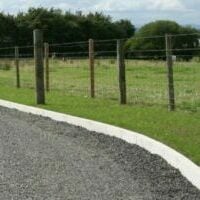
Kerbs made from concrete are a popular choice. This is because precast Concrete kerbs are durable and can withstand a range of weather conditions. In addition, they can be made to exact specifications, so they can be tailored to suit the project they are required for.
To see which Concrete mix is most suitable for this application, click here.
Self-compacting Concrete is an innovative Concrete that does not require vibration for placing and compaction.
Self-compacting concrete has higher fines content than conventional Concrete due to higher binder content and a different combined aggregate grading curve. These adjustments produce unique fluidity and inherent compactability.

Solid slab bridge decks are most useful for small, single or multi-span bridges and are easily adaptable for high skew.
Voided slab and beam and slab bridges are used for larger, single or multi-span bridges.
To see which Concrete mix is most suitable for this application, click here.

Haunching Concrete should be installed in order to support kerbs or edgings up to around two thirds of the height of the kerb or edging.
To see which Concrete mix is most suitable for this application, click here.
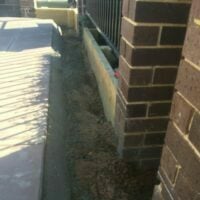
Trenchfill foundations are a type of shallow foundation that avoids bricklaying below ground by instead almost completely filling the trench excavation with Concrete. Typically, Concrete is poured to within 150 mm of the surface ground level.
To see which Concrete mix is most suitable for this application, click here.
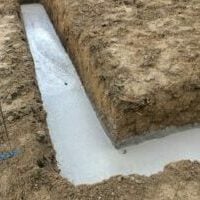
Blinding is the process of pouring a thin layer of Concrete over the floor of a new building; this can be over the hardcore or over the foundation itself. The purpose of this is to seal in underlying material and prevent dirt and mud from interfering with the structure.
To see which Concrete mix is most suitable for this application, click here.
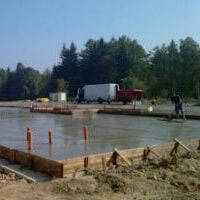
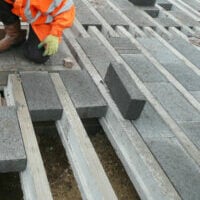
Beam and block suspended floor has become more prominent recently.
The floor is made up of precast Concrete beams, shaped a bit like the rails on a train track. These are laid on top of the inner leaf of the walls sitting on the DPC, but with no mortar bed. The 440mm gaps left between the beams are then filled with standard size foundation blocks until the entire floor is one flat slab.
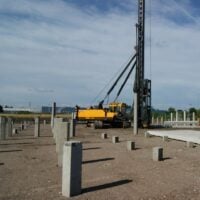
A Concrete pile is basically a long cylinder of Concrete that is pushed into the ground to act as a steady support for structures built on top of it.
Pile foundations are capable of taking higher loads than spread footings.
To find out more about which Concrete mixes are suitable for your application needs, you can visit our Applications & Mixes section.
Contact our experts today who will be able to support you in delivering the concrete you need for your next commercial project.
Contact our Concrete experts today >
Hawkes Group
Concrete Testimonial
Hawkes and the Mick George Group have built a great working relationship, with the company always doing their best to fulfil our order requirements. Their huge fleet of vehicles can handle any sized project. We're hoping to work together for many more years to come!

JJ Mac Ltd
Concrete Testimonial
Always a pleasure dealing with the Mick George Group. They always go the extra mile to make sure we get the service we order on time and at the best rates. All our managers and site support staff really appreciate the prompt and efficient service.

L Petriello Contractors
Concrete Testimonial
The Mick George Group have supplied our Aggregates, Concrete and Skip Hire for many years. Their service is fantastic and has always been without problem. We Would definitely recommend their services to others.
Latest Concrete Industry News
-

Cement industry reports 25% CO2 reduction
A new global report finds that the cement industry has reduced the CO2 intensity of cementitious products by 25% since 1990.
-

Demand for circularity in construction on the rise
A recent report asked 500 UK decision makers from the UK construction industry to share their views regarding sustainable material solutions.
-

Street Works UK: Material Classification Protocol Changes
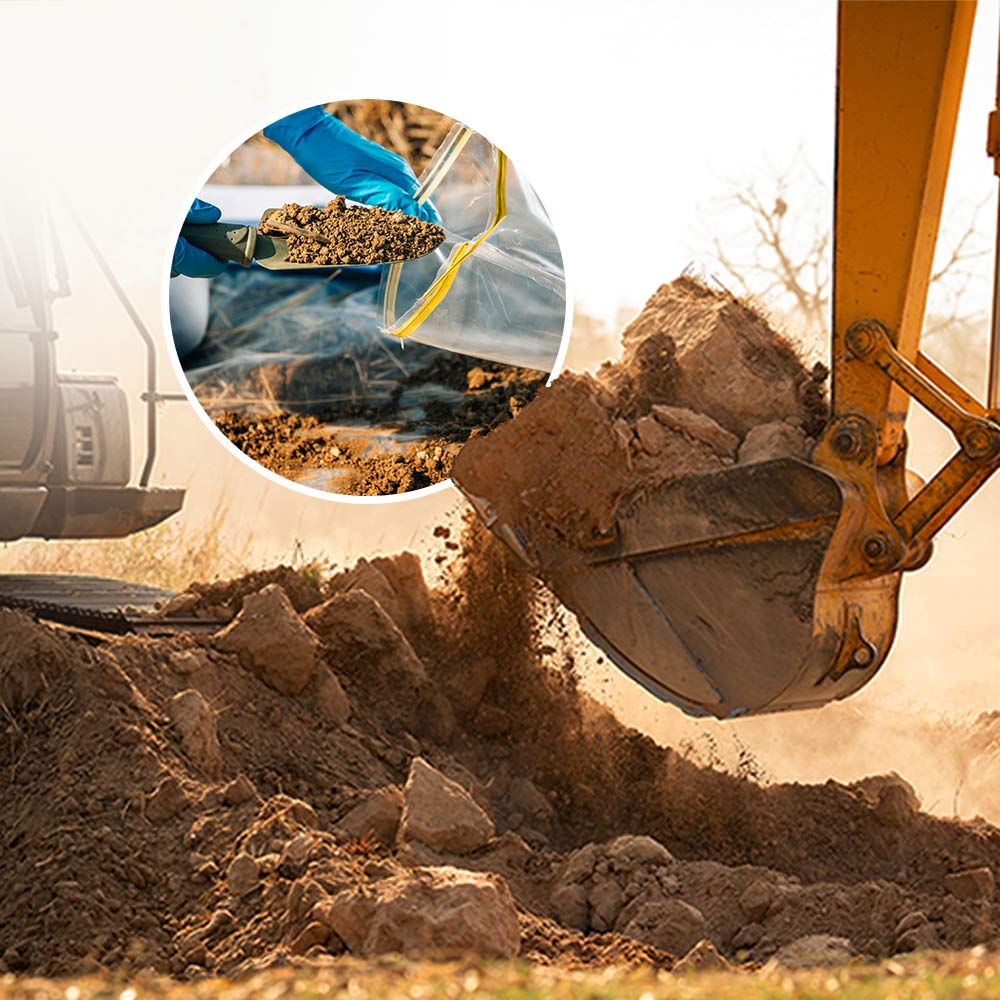
A material classification protocol is a framework for identifying and sorting materials, such as excavated waste, to determine if they are hazardous or non-hazardous.

Get the latest news & offers